Wednesday, June 21, 2006

Yay, Heat

If you're looking for analysis of and euphoria inspired by last night's game, you came to the wrong place. I do need to praise the stamina of my sixtysomething neightbors, who transformed from genial condo board enforces into revelers shortly after midnight.

Tuesday, June 20, 2006

80s hits and showtunes take on a whole new light.

I'm not sure whether to consider this video, shot by David LaChapelle for the runway opening of Heatherette, as art or mere oddity. I'm also not sure whether or not my love for Amanda Lepore is healthy or antifeminst (her self-objectification and status as a veritable human Barbie doll may be a bit problematic). Regardless, it's intriguing and just a little bit creepy.

As a side note, this video isn't work-safe - that is, unless you care for your superiors to believe that you're into male-to-female transsexuals covered in pink lipstick.

New address

You can find us now at agrandillusion.com

thanks for your patience.

Monday, June 19, 2006

"Romance and adventure..."

My review of Frank Kogan's book Real Punks Don't Wear Black.

Exciting day

One of the things I have to do today, before visiting the badass that impregnated by mother (here's a picture of him either pondering the meaning of life, about to recite Wallace Stevens' The Idea of Order at Key West in its entirity, or perfecting the 26th way to kill a man) is stop by the Social Security office. Several months ago, while still working at The Miami Herald, the paper published my Social Security number on the front of the Business section, ironically in a graphic about identity theft. While that's not the main reason why I left the paper, it definitely helped my decision. So now I have to get letters certifying that the new number is in fact mine, and not some scheme to skip out on student loans.

Oh! Blessed rage for order, pale Ramon,
The maker's rage to order words of the sea,
Words of the fragrant portals, dimly-starred,
And of ourselves and of our origins,
In ghostlier demarcations, keener sounds.
Cross posted from my blog.

and they call this an institution of higher learning

Larry Lebowitz, who has the distinction of writing on the most boring subject on earth--traffic--has a piece in today's Herald on Florida International University's refusal, after many years of planning, to allow a Metrorail station on its campus.

The powers that be at FIU don't want Metrorail to stop anywhere on the main campus.

Transit had been planning for several years to build its end-of-the-line station on a wedge of FIU land located just east of Florida's Turnpike and Southwest 117th Avenue near the National Hurricane Center.

Now Transit is considering a new site about seven-tenths of a mile farther south, on county-owned land at Tamiami Regional Park.

No one intimately involved with FIU's master-planning, or the campus' recent negotiations with Transit, would speak for the record, leaving spokeswoman Maydel Santana-Bravo to explain the university's rationale.

FIU supports building an off-campus Metrorail station at the park because it ''wouldn't take up precious campus real estate,'' Santana-Bravo said.

For those unfamiliar with Miami, FIU is on the Western part of Miami-Dade County, a part of the county historically disconnected--not only geographically, but also culturally--from the east side of the county, where Miami proper and Miami Beach are. The extension of the Metrorail would essentially put that hinterland within a 20-minute train ride from the hub of the county, and the airport. It should reduce traffic dramatically. During rush hour, it takes about 2 hours to make it through a 10-mile stretch of highway. It only makes sense for the geniuses at FIU to try to screw all that up.

Cross posted from TDU.

The atrocity of an essentialist quiz

This makes me irate.--a completely essentialistic (and thus irrational and sexist) quiz that rates your brain's gender. Here's what I got:


Your Brain is 47% Female, 53% Male


Your brain is a healthy mix of male and female

You are both sensitive and savvy

Rational and reasonable, you tend to keep level headed

But you also tend to wear your heart on your sleeve


So, essentially, according to this quiz, sensitiveness is a female attribute and rationality is a male attribute; wearing my heart on my sleeve is, I take it, another female attribute.

I realize it's a quiz, and thus something to be taken lightly, but as the great Monique Wittig has said, "Language casts sheaves of reality upon the social body," and through the language and outrageous implications this quiz makes, it blatantly perpetuates [sexist] gender stereotypes detrimental to the psychological evolution of our culture.

Sunday, June 18, 2006

because cuban children are not like the rest of us.

Following the apparent surge of Cuba-related news, we have this interesting tidbit from today's New York Times. Seems that the Miami-Dade School Board voted 6-3 to ban a children's book on Cuba, entitled "Vamos a Cuba"/"A Visit to Cuba" due to its allegedly containing "deceptive information and paint[ing] an idealistic picture of life in Cuba."

The cover of the book shows smiling Cuban children in the uniform of the Pioneers, the Communist youth group to which every Cuban student must belong. The 32-page book describes July 26, a Cuban national holiday that celebrates a historic day in Fidel Castro's revolution, as a carnival where people dance and sing. Critics also found misleading a page reading, "People in Cuba eat, work, and go to school like you do."

"This is a very simplistic portrayal of all of the countries in the series because it's intended for our youngest readers," said Joseph Garcia, a spokesman for Miami-Dade County Public Schools and Superintendent Rudy Crew. "Complex subjects like Communism are not addressed."

But Juan Amador, the parent who made the complaint, said the book depicted Cuba as a paradise.

"It portrays a life in Cuba that does not exist and omits a lot of facts," Mr. Amador said. "Such a book should not be accessible to our children."
Obviously, because a children's book suggests that Cuban children go about daily life in a way similar to their American counterparts, it is "misleading" and ought to be taken out of schools. God forbid that six-year-olds not be explained the horrors of socialist government gone awry.

Predictably, however, the ACLU comes to the rescue!
Howard Simon, executive director of the American Civil Liberties Union of Florida, said the ban violated the First Amendment and pointed out that the book was optional reading material and not a required textbook. The A.C.L.U. plans to file a lawsuit next week to challenge the decision.

"This is a throwback to the kind of politics we saw in Miami a few decades ago in which the war against Castro was played out as a war against the First Amendment in Miami," Mr. Simon said. "It's a self-inflicted embarrassing black eye for Miami-Dade County."
Indeed. The situation is almost as mortifying as the Harry Potter book-banning controversy in Georgia, save for the fact that the Gwinnett County School Board eventually made the less embarrassing decision. In the meantime, the book - and the 23 others that join it in its series - are being taken off of library shelves. Oh reactionary politics, up yours.

a house divided?

I don't care much either way about this. But I will say that Catalan sounds a kind of funny, a little like pig latin. I'm just worried that it will fuck up the recent sync with which the Spanish team has been kicking ass recently.

Cross posted from Diarist Unbound.

a schmall compliment

In today's Herald, my friend Emily has a good article on the Opa-locka city commissioners voting to give themselves a raise--which seems outrageous percentage-wise, but it's not when you consider they make $50 a month--and to have the city assume the lawyers' fees, which IS outrageous. (And yes, you guessed it, there are several suits pending.) Opa-locka is the poorest city in Miami-Dade county and also the most entertaining. And Emily covers it with flair.

The charter currently mandates that a city official, if found guilty of a charter infraction, pay the plaintiff's litgation fees. Should voters approve the referendum question, the city, rather than its officials, would be liable. According to Commissioner Timothy Holmes, the commission had little concern about placing the burden on the city, ''as long as we don't have to pay it ourselves," he said.

At an April 19 meeting, when the commission voted to give $10,000 apiece to the vice mayor and two commissioners towards their legal defense in a civil lawsuit, City Attorney A. Quinn Jones advised they would personally be responsible for the litigation fees if found guilty. The charter says if a court rules in favor of the plaintiff, fees will be assessed against the commissioner "whose vote made the litigation necessary."

At that meeting, Quinn Jones suggested that section 178 in the charter -- which imposes fees on officials -- could be abolished through a voter referendum. But Quinn Jones warned that commissioners should "be aware that state law supersedes the municipality's charter provision." Therefore, any charter amendment to repeal that clause would have to be crafted to duplicate state law or risk challenges of legality.
Emily is also quite a looker, and single. Here's a picture of her looking bemused yet judicious, on the far right, as I drunkenly leer at two namesless blondes.


Cross posted from my blog.

Cuba report

Here are two excellent articles about Cuba. The first one ran in the Sun-Sentinel today. It's about Fidel Castro's Internet revolution. Castro has built about 600 computer school around the country trying to spark ab information industry.

The Youth Club reflects the complexities of Cuba's technology policy. The government is not only trying to teach basic computing as part of an overall push on education, but also wants to develop a formidable software industry.

For most Cubans, however, the ambitious tech plans stop at the Internet. Cubans are allowed to use e-mail and an intranet of government Web sites on topics from the weather to literature, but access is expensive for the average worker. Typically the government approves Internet access only for foreigners and a select group of Cubans. These include certain officials, academics, journalists and employees of foreign companies -- though some people use the accounts of friends or relatives.

At a March ceremony in Havana marking the 15th anniversary of a national computer education center, Castro said Cuba needs to get used to a "new world that keeps changing around us." At the same event he promoted the idea of grooming software developers at the University of Computer Sciences, a campus about 50 miles south of Havana that aims to attract the country's brightest tech students and teachers.
It's almost amusing to watch totalitarian regimes join the modern world without making consessions on the thing that keeps them behind, their politics. Castro, try as he might, will never accomplish a software industry if he keeps access to the internet restricted. Cubans can't access the internet, only an intranet with information about the island and similar inoffensive stuff. Most ironic is that the internet could actually transcend the embargo, since even the United States can't sanction it, but Castro is too afraid of its freedoms to take advantage of the benefits.

The second was in the Herald yesterday, I think. It's a good account of the children of Cuban elites and the lives they make outside the country.
They are known as quedaditos, which means ''those who stayed'' but implies the under-the-radar lives they lead to avoid the whiff of dissidence that might stick to their decision to live outside the communist system.

''If you say something here, over there in Cuba they'll find out and you'll never see your family again,'' said a Cuban lawyer in her 30s who lives in Madrid. 'For example, if you put in the newspaper my name and quote me saying, `Cuba is a load of crap,' if that's published, they'll say: 'You said what? You're never going back to Cuba again.' ''

So the quedaditos try to live quiet lives and remain largely unknown outside the close-knit group of Cubans in their same situation.
Cross posted from my blog.

World Cup interlude

Bitch Ph.D. has an amusing post about balancing family and World Cup.

Pseudonymous Kid: Mama, will you make me a sandwich?

Me: Papa, can you make him a sandwich?

Mr. B.: What do you want, PK?

Pseudonymous Kid: A sandwich with mayonnaise and lettuce.

Mr. B.: What do you want with that? Ham, cheese, bacon? Do you want a BLT?

Pseudonymous Kid: No. Just flat cheese (i.e., the pre-slicedkind).


Also, I'm watching the France/Korea game and... does anyone find it funny that French fans chant Ode to Joy, a song by German?

Cross posted from my new personal blog.

Saturday, June 17, 2006

tis a sad day

NEW YORK · Barbara Epstein, a founder and co-editor of The New York Review of Books who was involved in editing The Diary of Anne Frank early in her career, died Friday at age 76.

More here.

Also, lest AGI be thought to only provide content when people expire, I'll start blogging soon, and not on the dead beat. But I've said that before, so be a good little reader and take my word for it.

Friday, June 16, 2006

James Wolcott nails precisely what's so rancid about Woody Allen's Match Point, in particular what's so painful about Scarlet Johannsen:

Johanssen really can not act except in brief moues. Usually it doesn’t matter, because the camera feeds on her pillowy features and (male) viewers project smoldering passion into her jug-like passivity. In Lost in Translation, Bill Murray was so overstocked with ennui that her youth came across as the vitality he was missing, never mind that she also seemed anesthetized. Here, surrounded by real actors, she sounds like a toneless amateur rattling off the stock dialogue Allen writes for young actresses; she doesn’t even bring the sly attack Juliette Lewis did to her writing-student role in Husbands and Wives (her chatty, pseudo-feminist critique of Woody’s novel in the cab was a masterpiece of destructive criticism—in which she took such sly delight!). Emily Mortimer is so charming and vivid as Jonathan Rhys Meyers’s girlfriend (later, wife)—so outclasses Johannsen’s character—that the only plausible reason he’d cheat on her is because Johannsen is American and blonde, her nookie pure Hollywood gold; Woody’s shiksa fascination in action.

Thursday, June 15, 2006

Extinct indigenous tribes and Neil Young

Every Neil Young fan has their own favorite Moment of Young Madness; the man's career overflows with them. My current favorite is "Like an Inca," a track no one's thought much about, seeing how it's buried at the end of side two of the only 1980's Young album that remains out of print. Trans is remembered as Young's Devo record, but this is inaccurate: it sounds like Styx's Kilroy Was Here, a chirpy arena-rock dystopia also hustled on unsuspecting fans in 1982. When it's not fighting for elbow room amidst the vocoders and EPCOT Center synths, Young's ugly guitar injects menace and danger to tracks whose search for tranquility in an environment crippled by disease and mistrust flirts with Aquarius-age complacency. In this it's got lots in common with other 1982 albums by aging boomers (Paul McCartney, Townshend, Reed, Billy Joel, Elton John) making peace with skinny ties and syndrums. Remove the Tron overtones and you've got Deja Vu.

But back to "Like an Inca." Often described as an unseemly amalgamation of "Cortez the Killer" and "Like a Hurricane," it's really a variation on "Cortez" set to a Santana beat. The melody anticipates 1986's "Pressure" (I'll defend that one some other time). The lyrics are jejune colonialism, as stupid and barbaric as Young and Nils Lofgren's competing guitars; and yet, and yet, Young's empathy and genuine desire to be one of those encroached Incas, at the point of extinction, crouching in "beautiful buildings to house the chosen few," sounds far less fatuous coming out of his mouth than, say, David Crosby's. The guitars reflect his confusion; he's honestly stupid, maybe. Or he's a stupid genius:

if you want to get high,
build a strong foundation
sink those pylons deep now
and reach for the sky
if you want to get lost
in the jungle rhythm
get down on the ground
and pretend you're swimmin'.
What do you do with verses which begin as empowerment cliches and end as survivalist doggerel? How are you going to get your hands on this song when Trans has yet to be reissued?

Tuesday, June 13, 2006

Signs and signals

There are two voguish current terms which make American political discourse extremely irritating. They occur routinely in every press conference, every current-affairs broadcast, every congressional debate, and almost every editorial comment. The terms are "perception" and "signal." The first is used as either a displacement or an evasion. The speaker need not say that he thinks the consequence of policy X will be harmful. That would be definite nad thus too risky. It is usual, then, for him to intone that policy X "will be perceived" as harmful. This has two political advantages: it takes longer to say and thus sounds more important; and it is ambiguous, having all the moral weight of the statement "It's not me, it's the neighbors."
-- Christopher Hitchens, "Perceptions and Signals" (Feb. 18, 1984).

Carnage!

Behold – the damage wrought by Tropical Storm Alberto. And we have nine months of this left.

Monday, June 12, 2006

Announcement: Chanteuse and rapper lock eyes

Merely for stomping over the thriving subgenre inaugurated by Method Man and Mary J. Blige (and adulterated to increasingly cowardly returns) of shoving sensitive poetry in a chanteuse's ear that the rapper is too thuggish to repeat himself, Nelly Furtado featuring Timbaland's "Promiscuous" is the single of the year. This is one of the few contemporary R&B hits in which the rapper and chanteuse are evenly matched -- in this case it's all the more impressive considering the chanteuse in question is birdbrain Nelly Furtado. It's an honest-to-goodness dialogue, fraught with tension and smut, and as ludicrous in its way as Raekwon and Ghostface trading lines*. As for Timbo, well, all those records with Aaliyah and Missy Elliott sure helped.

* Maybe the trend was dying anyway. Ghostface, always the cuddliest Wu-ster, wheezes like the Irish grandma in a John Ford movie in his duet with Ne-Yo, "Back Like That."

Peanut Butter Words vs Grand Illusions

Mike Powell and I graduate from pulled pork to Sonic Youth's Rather Ripped, on AIM:

------------------------
Powell: I see it as a kind of flipside to EVOL, though it's tainted by the fact that I fucking adore evol
Powell: but evol's this album about High Passion (shadow of a doubt, green light, even tom violence); but where evol's remainder was destructive, this one is sort of about peaceful liberation ("do you believe in rapture," parts of "turquoise boy")
Soto: It seems like RR is music recorded by adults who've experienced and thought through the merely received notions of passion (or High Passion, as you call it) which dotted those early albums
Powell: yes yes yes!
Powell: because you know what--I started thinking about this stuff b/c I was in a coffeeshop and PET SOUNDS was on, and I was thinking about that balance; the maturity/youth, passion v. teenage "bullshit" thing.
Soto: It's marvelous that "Do You Believe in Rapture?" is posed as a question. if the same trope was on EVOL it would have been a statement. They're adult enough to have realized that rapture is sort of chimerical
Powell: definitely
Powell: one thing I was noticing, speaking of phrasing: the important stuff in "Reena" is all posed as empirical observation
Soto: it does start w/out fuss, doesn't it?
Soto: we're hearing lyrics 4 seconds into the song
Powell: oh it's a great beginning
Powell: it's like, you wonder if somehow the first 30 seconds get cut off
Soto: and then once in a while ("What a Waste," "Incinerate") they do indulge in uncomplicated sex, because that's ok too.
Powell: right, the uncomplicated sex thing is fine, almost essential to the album – or at least being a little flip about it
Soto: "a little flip" – exactly right. It's bizarre. Usually a band dispenses with irony as it ages; SY have embraced it.
Powell: explain
Soto: Irony questions form – the way in which we formulate answers, even douts the way in which questions are asked. It's a REDRESS.
Powell: oh man you are trying to pull out my wires again
Soto: those early records were the sound of kids tripping on Manson and outsider myths. Their records post-Washing Machine seem informed by those myths; now they're asking if you can live your life (get coffee, get laid) with these myths which shaped your youth
Powell: I guess yeah, I agree with that, to a degree...
Soto: I think so. It's what they love about Neil Young: their work is a continuum. I still hear echoes of the old SY in this record
Powell: yeah I think I'm coming on to what you mean with the youth-shaping myth thing
Soto: "Sleepin' Around" is both a "dumber song" than "Death Valley '69" or "Green Light" yet is packed with wisdom
Powell: well, it's got more wisdom because it's probably the way a cuckold would really carry himself
Powell: when your girlfriend is fucking someone else, you are not thinking about feelings being "green lights" or any of that shit

Saturday, June 10, 2006

Roll over, Russert: Stewart's got the news

I won't applaud Jon Stewart for soundly eviscerating Bill Bennett on the subject of gay marriage (which he did, btw, politely and with a lot of class), in large part because his huge audience knew he would win, no contest. But I do marvel at the tremendous effectiveness of comedians as pundits. After all, the great ones mastered their craft: timing, wit, speed. As Kung Fu Monkey remarks, "It's almost as if nothing more than a lifetime of performing comedy had honed his ability to make his point clearly, highlight and ridicule the idiocy of his opponents' argument simultaneously, and do so with a simple emotional resonance so effective his opponent is left helpless to respond."

Tim Russert's reputation for "objectivity" is based upon the diligence of his staff, who actually take the trouble to sift through a politican's record for contradictions. In response the politician stammers that he was "taken out of context." Whereupon Russert DROPS THE SUBJECT. If he actually questioned their incoherent jargon, called them on their use of cliches (look to the language, Orwell always said), forced them into retreat, then he would deserve his reputation. Russert however is quite comfortable with this bowdlerization of English, which he happily employs in the presence of his royal court of bloodless geezers (David Broder, E.J. Dionne) and geezers-in-waiting (Jon Meacham, Byron York).

Eliminate the Sunday morning punditocracy, I say. Install Stewart, Margaret Cho, and Stephen Colbert. Newt Gingrich will never glower with such confidence again.

Thursday, June 08, 2006

"If I was anything, I'd be the water in your bathtub"

I'm embarrassed. Yesterday was Prince Rogers Nelson's birthday. No doubt he's happy: this time he's bolstered his recent cred with a pretty good new album (which happened to be his first number-one debut ever).

Listening to a trove of his b-sides this morning, as well as outtakes from the never-finished Dream Factory project, it hit me how much pleasure Dirty Mind, 1999, Purple Rain, Parade, Symbol, Emancipation, and – supreme among them – Sign 'O' The Times have given me over the years. Near-misses like Controversy and Around the World in a Day still perplex; crap like Graffiti Bridge and Diamonds & Pearls still provoke (no one's made much sense of Lovesexy, which is to say: it's about time someone did).

Tuesday, June 06, 2006

Why I Love Christgau.

Because he agrees with me, naturellement. Today's review of Sonic Youth's Rather Ripped echoes my fulsome praise last week. Dissenting with Amy Phillips' widely derided contention that, with Murray Street, Sonic Youth had passed into irrelevance as they approached middleage, Christgau nails the subtle paradigm shift which occurs in the aging and not at all to younger critics -- the ability to distinguish between taste and judgment:

It's fine not to like almost anything, except maybe Al Green. That's taste, yours to do with as you please, critical deployment included. By comparison, judgment requires serious psychological calisthenics. But the fact that objectivity only comes naturally in math doesn't mean it can't be approximated in art.
Rather Ripped has already surpassed Sonic Nurse as my favorite post-1990 SY album. So go buy it already.

"Taken Seriously"

From a post sent to Andrew Sullivan:

It may sound trite, but I think it's fair to say that my tolerance for gay rights generally and the marriage right specifically is due in no small part to the Pet Shop Boys. Their music was deliberately ambiguous and over time, I came to appreciate how appropriate that was. The typical Pet Shop Boys song is about love - new love, love on the decline, lost love, inappropriate love - sentiments felt similarly by straights and gays. Times have certainly changed over the last twenty years, but even now, as a straight man with few gay friends, the Pet Shop Boys' music is as close as I usually come to encountering gay culture.

For years, I've loved their music; somewhere along the line, though, I came away with something I hadn't bargained for - an appreciation that gays were not really "different" and that, once superficial differences were set aside, we had more common ground than I would have thought. I think that, just as racial equality gained ground once whites came to view blacks as not particularly different than themselves, the Pet Shop Boys enabled many straights like myself to appreciate gays' humanity rather than being distracted by their sexuality. What Tennant and Lowe still convey to clueless straight boys like myself is not an overt message which has to be confronted (and which we might, even now, instinctively resist), but is instead a quieter comment on universal things, regardless of your gender and that of the person you love.

I'm a Pethead and I'm a better person for it.
Their new album Fundamental sounds pretty good to these ears so far.

James Blunt is so beautiful

Roffles:

This may be oh-so-last-October to some, but James Blunt is a British singer-songwriter whose brilliant debut album "Back to Bedlam" showcases his haunting voice and vivid lyrical imagery. You've probably heard the singles "High" or "You're Beautiful" at some point if you go into any Starbucks — it always seems to be playing in there. Anyway, what's interesting is that James comes from a military family and served four years in the British Army, rising to the rank of Captain and seeing action in Kosovo, among other places.
I love The National Review.

Monday, June 05, 2006

No words necessary...


The recipient of MTV's Best Kiss and Best Performance awards.

Thursday, June 01, 2006

English vs American laddishness


The Sasha Frere-Jones interview in which he discusses his New Yorker article on why Americans are leery of English pop is more insightful than the article itself.

Regarding the insoluble problem of how to make English issues acceptable to a wide American audience, Sasha defines the boundary of what's acceptable:

The problematic content in these songs is the description of social and political realities or ideas about them. (Also, the Jam and the Specials sounded really English. There’s a line that is being constantly redrawn: we can take some accent, but not a lot.) Americans can handle aesthetic darkness as long as it’s depoliticized and personal. Look at Depeche Mode—we love Goth music, which is essentially a passive pleasure: depression as comfort. The Cure and Depeche Mode ended up with big American fan bases (although the Cure’s happy songs are what really caused them to break out here). We like the moody types, such as Radiohead, but we don’t like it when somebody says, clearly, “This bad thing happened and I have a theory as to why, and also we are from England because you can hear my weird accent and I just talked about takeaway curry and you’ve haven’t the foggiest.”
But the English have as pronounced a weakness for depression-as-comfort as the rest of us; the irony employed by the likes of Morrissey and the Pet Shop Boys is a mere garnish, a subtle way of hiding the non-subtle ways in which these acts enforce their miseries to a willing (ok, passive) audience. Which means they've got more in common with the laddishness of Oasis, Blur, and the Arctic Monkeys than they (and their fans realize). Even determined swishes like Placebo hide their ambivalences behind power chords and granitic rhythms that (I'm just supposin') Linkin Park and Staind might admire; and since Staind and Linkin Park sell millions of records without a drop of lip gloss why do we need the English equivalent?**

The moral? Laddishness is universal -- and territorial.

**Green Day could be our Placebo. Billie Joe is as cute-ugly as Brian Molke. They write songs which femme boys, macho boys, undergraduate women, and Anthony DeCurtis can hum and love. But their sexual politics are if anything more stunted than Placebo's. Where Placebo at least suggest they've made it to 12th grade, Green Day have flunked 10th grade sex ed twice.

Monday, May 29, 2006

Simon Reynolds gone Green

Simon Reynolds raves about Scritti Politti's White Bread Black Beer:

The new album weaves together elements of everything [Green] Gartside has ever loved and revisits every stage of his nearly five decades-long journey through music. The Beatles are here, there and everywhere on the record; T. Rex and the Plastic Ono Band meld on the deliciously stompy anti-Jesus ditty After Six; Gartside's pre-punk passion for folk-rock and traditional English music is audible in his guitar playing; and there is hip-hop in the beats and R&B in the production's gloss
Which makes me suspicious. The last time Green flirted with the banality of commerical pop he made pap (1988's Provision). Not only is it too easy for a music journalist to follow a meme issued by a notoriously fickle artist (Green Gartside's married! He stopped drinking! Now he'll write REAL tunes!), but it's ever so slightly dismaying for Reynolds to discard his own ambivalences about Green's meta-music, especially when Rip It Up & Start Again was so eloquent about fleshing them out (about 1985's Cupid & Psyche '85 Reynolds writes that Green's "oddly depthless lyrics" established "the lover's discourse maze, a chain of foolishness along which desire travels endlessly, looking to heal the primal wound of lack at the heart of being," after which he expresses muted dismay that Green's sudden careerism matched the narcissism telegraphed by Cupid's syndrum beats).

Now I will play "Perfect Way" and "Absolute" at earsplitting volume.

R.I.P.

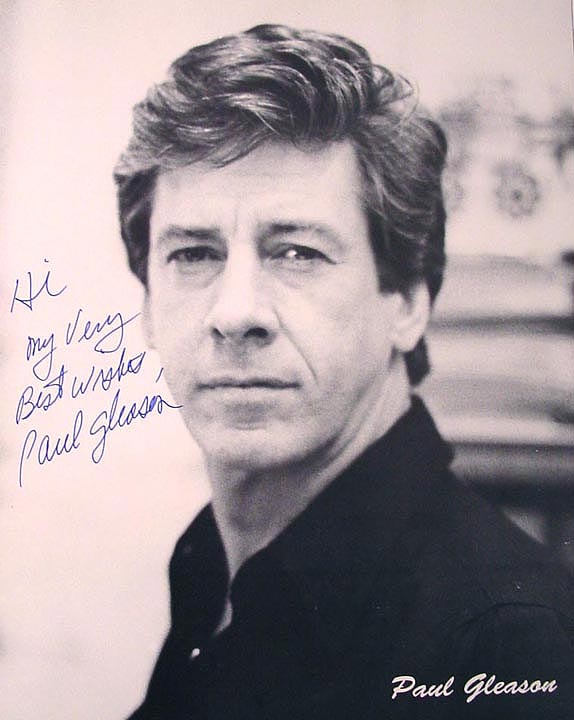
Paul Gleason has died. Breakfast Club fans always knew Judd Nelson would outlive him.

Good news: Whit Stillman finished the script for his next film yesterday -- only eight years after The Last Days of Disco was released. The Jamaican setting represents a real change for the director of Metropolitan and Barcelona. And he's got other ambitions: to write and direct a movie about the Revolutionary War. The hyperliterate Stillman (who once said his five favorite books are Pope's Essay on Man, Tolstoy's Childhood, Boyhood, Youth, S N Behrman's book about Max Beerbohm and an edition of previously uncollected stories by F Scott Fitzgerald) isn't interested in a Hugh Hudson-Al Pacino schlockadrama:

"An inspiration was an interesting remark from one of our generals, Nathaniel Greene. As it was defined then, it was a civil war between Whigs and Tories. They [Greene's side, the revolutionaries] were the Whig army, and they were fighting the Tories. It was reflected by the politics of Britain: Edmund Burke and others were articulating the Whig cause. Greene said that by the end of the war it was an American army with British soldiers fighting a British army with American soldiers. There had been so much side-switching, and sociological internecine warfare. This could be really fascinating."
Oh, and if you haven't seen Metropolitan (1990), you should.

Saturday, May 27, 2006

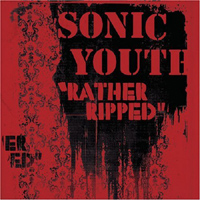
I've been telling friends for a couple of weeks that I almost wish Sonic Youth's Rather Ripped isn't as good as I think it is. Fucking bastards -- releasing two great albums in as many years. With Jim O'Rourke they recorded Sonic Nurse, an unexpected recapitulation of their strengths, recalibrating gnarly guitar as concise pop noise (not to mention as vague but never obscure political pop noise) much better than Goo or Dirty managed. It was my favorite album of 2004.

I don't know what O'Rourke did for them. Maybe he was Brian Eno. Maybe he was Lol Tolhurst. Clearly his departure was necessary insofar as he accomplished his goal: get SY to write/jam intelligibly again. If they've long since exchanged the danger of "Death Valley '69" or "Catholic Block" for the cool-by-the-pool distance their celebrity affords them (think "Mariah Carey and the Arthur Doyle Hand Cream"), maybe they weren't too intimate with the danger either, and thus closer to rock's greatest chameleons than we thought (the Chameleon's Dictum: simulate, don't create). On Rather Ripped Thurston and Kim are my kind of John and Yoko; their version of domesticity allows Thurston occasional jerk-off time in the bathroom ("Sleepin' Around"), and permits Kim to flirt with an indifferent hot young thing, to whom she growls "What a waste/you're so chaste" with no loss of savoir faire on either side. The aptly named "Incinerate" might be a hit if alternative radio stations still existed. "Pink Stream" glistens as brightly as A Thousand Leaves' "Hits of Sunshine" (and it's mercifully shorter). Contrary to what John says, "Do You Believe in Rapture" fucks with the opening salvo in all the right ways and is heartstopping in its own right.

Like their sometime idol Neil Young, Sonic Youth are taken for granted until the moment we realize that not only are they more prolific than they ever were, but that mass production has liberated them from the perils of creating product which tries to live up to some image of Sonic Youth-ness.