Thursday, March 16, 2006

If you died trying, would you make it to paradise now?

"Why do men from Nablus put so much sugar in their tea?" "I don't know, it's just the way it is. Everybody does it."
It's a little exchange early in recent Oscar Nominee "Paradise Now", but that's the heart of the movie. It's about two Palestinian terrorists as they may (or may not- no spoilers here) be getting ready to die, and why they do the things they do, and it's a very human movie. It reminds me (and sometimes I do need the reminder) that terrorists don't crawl out of their mommies with bombs strapped to their chests. That they're people who are capable of kindness, keep pets, have favorite songs, can love their girlfriends (or boyfriends, yes, there are girl terrorists), and sometimes like a lot of sugar in their tea.You don't have to justify murder to understand that it comes from people, not cartoon characters.

I just watched this next to Jim Sheridan's "Get Rich or Die Trying" (a Curtis "Fifty Cents" Jackson quasi-biopic), and some interesting moral problems arose.

Why was I left feeling a lot more sympathy for the terrorists than for Fitty?

I'll tell you three things: One: Fitty makes the big bucks out of rehashing his gansta ways. You're supposed to love him because he's sorry now, has dimples, is on MTV all the time, and loves you like a fat kid loves cake. Still his best line, but damn it, is that really such a cultural accomplishment?

Two: 50 Cents came from a (sort of) impoverished background*, but he was not culturally isolated. (One of the characters in "Paradise Now" has only been to the cinema once in his life- to burn it down during a protest.) By contrast, Fitty wasn't raised believing it was God's will that he should hold up a liquor store with a handgun. He knew different, but went ahead and did what he did. Don't get me wrong, I UNDERSTAND him as much as I understand the terrorists, (who wouldn't like to sell crack to little kids?) but in a weird way he's just a lot less excusable.

Three: Terrorists, whatever else they may be, are not selfish. They do what they do out of ideals (FUCKED UP IDEALS, but ideals nonetheless.) They think they are serving God, their people, their country, whatever particular brainwash they've been subjected to. (No need to mock their feeble mindedness- if you think you haven't been culturally brainwashed into accepting some very horrible things, then you're not thinking hard enough.) But when Fitty was out shooting (and getting shot), he wasn't serving nobody but his need to get a better pair of Nikes. Sorry for the rant. It's late, you know.

Watch "Paradise Now." Don't worry, fellow Zionists, anyone can agree on it. Except the Academy, they went for the less tricky- and treaclier- "Tsotsi."

*re: the "sort of impoverished background"- he still had his Wheaties every morning, he didn't lack a house or a family network, and his crack-selling momma bought him all sorts of nice clothes, as the movie reassures me. Coming from a REALLY impoverished background, I find that sort of sad story inadmissible as an excuse for attempted murder. God, I'm turning into an asshole conservative in my old age, aren't I?
Wednesday, March 15, 2006

Ode to a Commode

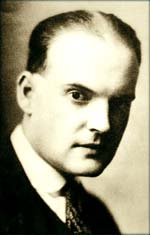
Edmund Wilson – the first critic with the prescience to formally acknowledge the greatness of Joyce, Proust, Yeats, and Stein; author of one of the great dissections of Marx, Engels, and their predecessors (To The Finland Station); did the same for the Civil War (Patriotic Gore); weighed the significance of the Dead Sea Scrolls; one of my heroes – on the superiority of the American commode:

I have had a good many more unplighting thoughts, creative and expansive visions – while soaking in comfortable baths or drying myself after bracing showers – in well-equipped American bathrooms than I have ever had in any cathedral. Here the body purges itself, and along with the body, the spirit. Here the mind becomes free to ruminate, to plan ambitious projects. The cathedrals, with their distant domes, their long aisles and their high groinings, do add stature to human strivings; their chapels do give privacy for prayer. But the bathroom, too, shelters the spirit, it tranquilizes and reassures, in surroundings of a celestial whiteness, where the pipes and the faucets gleam and the mirror makes another liquid surface, which will render you, shaved, rubbed and brushed, a nobler and more winning appreciation.
– from "Europe" (A Piece of My Mind).

Tuesday, March 14, 2006

The Boys are back in town.


One track from the Pet Shop Boys' latest, Fundamental (due in April) has been leaked. "I'm With Stupid" is deliciously retro: specifically, class of 1987 limey dance-pop: a sassy recombination of Stock-Aitken-Waterman synth-horns and Living in a Box's absurd eponymous hit. A pity Neil Tennant sounds so wan.

Drop me a line if you want a copy.

Monday, March 13, 2006

For Your Pleasure

This month's sorting through the detritus of culture, high and low.

Arctic Monkeys, Whatever People Say I Am, That's What I'm Not

Marcello Carlin almost had me sold on this latest NME-approved quartet of laddish ephemerality, not the least because he stresses this point: "And, like the Police, the Arctic Monkeys are the kind of group which only really makes sense when they are number one in the charts" [in England, of course]. I can understand why these guys are sensations: they enact every fantasy dreamt of by the mob. They may have titled one number "From the Ritz to the Rubble," but most of this album chronicles the reverse: a social climber with neither the cheekbones and pedigree of Jonathan Rhys-Meyers' Dostoyevsky-addled killer in Match Point, nor the murderous impulses of Luke Haines (Auteurs model, not Black Box Recorder), he's bilious and resourceful, but not enough to get him past the bouncers or persuade some bird to dance with him, so instead he gets pissed with his mates and narrowly avoids arrest by truncheon-wielding cops. Flashes of wisdom register not on Alex Turner, an asshole infatuated with the put-downs and allusions gleaned from a respectable middle-class education, all of which he's willing to eschew, of course, when he's serenading a whore with a heart of gold who's a lot like Roxanne. So far Turner's smart enough to realize he's gotta try harder ("But now this haze has ascended/It don't make sense no more," he confesses in "From the Ritz to the Rubble"); that his bandmates should stop embellishing their very good tunes with the usual post-punk aural decoupage (Andy Gill guitar, martial beats, elephantine structures, fill in the rest); that he's gotta lead the mob instead of half-assedly asserting his right to exploit its rage. GRADE: B+


* Sasha Frere-Jones, "A Ghost's World"

A brief, excellent overview of Ghostface Killah's remarkable career and review of his latest, Fishscale (four tracks produced by MF Doom!). Always trust great writers to remind you of an obvious-and-of-course-overlooked point: Ghostface's voice "is a gorgeous instrument, mellifluous even when he’s yelling, which he does an awful lot."


* The English Beat, "Can't Get Used to Losing You" and "Save it For Later"

When loneliness holds and horrifies, find succor in smut.

Thursday, March 09, 2006

Brokeback, Vidal, and advertising

To protest the naming of Crash as Best Picture of 2005 by the Academy of Motion Picture Farts & Biases and as a gesture of thanks, the members of Dave Cullen's Brokeback forum got together in record time, rounding up over $16,000 to pay for a full-page ad in tomorrow's Variety.

Here's a link to the ad.

Finally, here's Gore Vidal, irascible as usual, proferring mini-reviews of Brokeback, Capote, and Match Point, his favorite film of 2005 (um, well, nobody's perfect). He confirms that Rupert Everett will play him in the Capote biopic due next year:

I’m being played by quite a good British actor—Rupert Everett. I ran into him recently, and he told me he was playing me, and so I said well, have a good time, and he said, “You know I’ve been complaining it’s such a small part.”

I said, “Because I avoided Capote!” [Laughs.]
Har har.

Wednesday, March 08, 2006

The New World

Image hosting by Photobucket

As an, admittedly, slightly aloof moviegoer (well, individual), 2005 held very few special moments for me. Moments I can recall as breathtaking came seldom and very few times did a film make me smile with the realization that maybe what I was seeing was not just entertainment to pass the time but a slice of that ever-elusive quality - Art. I felt this way while watching David Cronenberg's History of Violence. I felt this way while watching Ang Lee's Brokeback Mountain. But most of all, I felt this way while watching Terrence Malick's The New World.

The film's scope, beauty, music, harmony, all resonate in me in quite a soulful manner. Pretentious? Sure the film reeks of pretentiousness, if you buy into that falacious critique. Art, above all else, seeks to illuminate. And illuminating is the only adjective I care to use to describe the moments in the film where Wagner's Vorspiel from Das Rheingold is played to accompanying cinematography.

It was not surprising that The New World did not get nominated for Best Film or Best Directory by the Academy. The following excerpt from J. Hoberman's article in The Village Voice explains how this came to be:

"New York Times critic Manohla Dargis found only one possible explanation for The New World's failure to attract more than cursory Academy of Motion Picture Arts and Sciences attention: 'With the exception of my few dear friends in that august body, [the Academy members] are idiots.'"

Some say the Academy collective is an idiot for not unanimously voting for Brokeback Mountain as Best Picture. I call them idiots for failing to nominate The New World at all.

Tuesday, March 07, 2006

Jazz dilettantes need not apply


My favorite jazz-rap album, Tribe Called Quest's The Low-End Theory, gets down to business from the opening bars of "Excursions." Q-Tip and Phife were so leery of ostentation that you barely notice the shout-out to bass great Ron Carter in "Verses from the Abstract." Digable Planets' Reachin' deserves similar praise – and the beats are much harder.

De La Soul's Buhloone Mindstate, 1993's other jazz-rap touchstone, is a curious listen. Instead of bolstering the insouciance that's always been their greatest asset, the jazz touches reenforce the impression that a crew of excited dilettantes have commandeered the studio; the album is in its first third so generous about sharing its space with the likes of Maceo Parker that De La's identity is diluted. It does recover, and whatever else, it's their best post-De La Soul is Dead album -- a selfless epitaph to the first part of the career of one of the most consistent acts in pop music.

Anyway, here's my review.

Monday, March 06, 2006

See? We are all getting along!


Enough with the jeremiads. So Brokeback Mountain didn't win. I did -- at a friend's Oscar party...a $25 Macy's gift card!

Since the victory of Crash augurs a new era of understanding, it's only fitting that I post this evidence that the age of Aquarius is well nigh. Clockwise at the Kodak Theatre bar we have: Best Supporting Actor nominee Jake Gyllenhaal, Best Actor winner Philip Seymour Hoffman, Best Actor nominee Heath Ledger, Best Actor nominee Joaquin Phoenix (back to camera), and Best Supporting Actor winner/King of Hollywood George Clooney. One can only hope Clooney got the round of Jaeger shots.

Highway Robbery

"Not since Titanic," one of my-coworkers lamented this morning in the heat of Post-Oscar buzz "has a best-picture win been this surprising." He was hardly alone. Less than 24 hours since the Kodak theater was packed with stars and Jon Stewart's trademark sarcasm, the backlash and the praise depending on which side of the fence you're on had already started to roll in. The arguments have ranged from Titanic comparisons like the one listed above to the extreme right-wing flip-floppers I've encountered who have gone from blasting Hollywood's lack of moral decency to praising its support of traditional values. This is, of course, to be expected. On the list of things people will always argue about to no end, you're likely to find three things: religion, politics and movies. What's fascinating about this year's response, however, is the driving force behind almost every comment I've either read or heard, positive or negative, seems to be not this year's winner, but the loser: Brokeback Mountain.

Like it or not, Titanic's win was hardly a surprise. It had the support of die-hard fans that saw it six times and wept on every occasion. It had the distinction of being one the highest grossing nominees ever and the considerable difficulty of it's production to boast. Crash has neither. Brokeback Mountain's domestic gross alone comes close to matching Crash's overall worldwide gross of 83.4 Million. And the sad story we've been given on how hard it was for a movie as "controversial" as Crash to get off the ground does nothing to eclipse the years Brokeback Mountain spent languishing in the industry waiting for actors and producers brave enough to get behind it. So what exactly is compelling people to make comments like "Thank God Crash beat Brokeback Mountain" which I've found littered across message boards or spoken by the supposedly open-minded individuals I've encountered? They don't strike me as similar to the passionate gushing of obsessive fans I encountered in Titanic's defense. And they certainly seem to forget that there were four other losers. It seems to me that quite simply, there are more Brokeback Mountain haters than there are Crash lovers.

There is obvious evidence of this of course; Crash didn't have essays written on how it contributes to America's moral decay. Try as it might, it didn't spark nearly as much debate as Brokeback Mountain did. And on a subtler level, there potentially exists a contingent of individuals who hoped on the Crash brandwagon as a result of Brokeback Mountain backlash--average, ordinary people who weren't gushing about Crash nearly as much when they first saw it. People who liked it, but weren't necessarily starting best picture campaigns. Average, ordinary people still potentially as unaware of their subconscious prejudices as their favorite film Crash tried desperately to point out. And why does this matter?

Because as the post-Oscar dust settles, Crash "supporters" will try to tell us that its aim was daring, that its message was powerful, and that its impact was immeasurable. They'll tell us it's the kind of film that will be felt for years to come. They will try to make us forget the uphill battle Brokeback Mountain faced, the social debate it sparked and its position as the only film nominated this year with a stake in cinematic history. As good and important as Crash's message was, it joins a long list of powerful films that deal with race relations in America; and moreover, as any Avenue Q fan can tell you, the film doesn't necessarily go any deeper in its 2 hours than the musical does in the 5 minute song "Everyone's a Little Bit Racist." For all that has been said about it's daring, unless I missed a scene or two, Brokeback Mountain didn't feature Jack getting shot with BLANKS. Ennis really loses Jack, and the emotional repercussions ripple as subtly and powerfully throughout the film as its social impact undoubtedly will.

And yet, for anyone attempting to remain liberal without necessarily aligning themselves with the sinister "homosexual agenda," Crash provides a serviceable substitute. A sentiment Sandra Bullock's character may have shared in terms of minorities. Before being attacked on the street, we are lead to believe her character would never have voiced her hidden fears and prejudices. An important message to be sure, but one that makes me wonder if it got through.

In a year that featured George Clooney declaring his pride at being considered "out of touch" and Nicole Kidman describing Jack Gyllenhall's role as "precedent-setting," it seems odd that the Academy as a whole didn't recognize the film itself for that very same reason. We cannot know for sure if it was Brokeback Mountain's theme that kept it from winning the best picture nod it, in my opinion, undoubtedly deserved, but if so, I can only marvel at the irony involved in Crash winning over Brokeback Mountain because Hollywood wasn't able to look past it's hidden prejudices.

I sincerely hope that wasn't the case. And yet, consider this breakdown of the pre-Oscar awards garnered by each of the films:

Crash:

Chicago Film Critics Association
Image Awards
SAG (best ensemble)

Brokeback Mountain:

BAFTA Film Award
Boston Society of Film Critics
Broadcast Film Critics Association
Dallas-Fort Worth Film Critics Association
The Director's Guild
Golden Globes
Independent Spirit Awards
London Critics Circle Film
Los Angeles Film Critics Association
New York Film Critics Circle
PGA Golden Laurel Awards
San Francisco Film Critics Circle
Satellite Awards
Southeastern Film Critics Association
Vancouver Film Critics Circle
Venice Film Festival - Golden Lion
The Writer's Guild

Like I said, I can't say for sure what happened last night, but it just doesn't seem to add up. And if you can't stand it, you've got to fix it.

Sunday, March 05, 2006

Hollywood: Tara or Sodom?

Responding to Michael Medved's lamentations of doom, James Wolcott reminds us that Hollywood has never reflected "traditional values":

...from its birth it's reflected urban energy, cosmopolitan taste, social conscience, and pagan fascination, and when it's conformed to conventional pieties, as during the dreariest stretches of the postwar period, when disillusionment and subversion had to sneak in through the shadows of film noir as the topline product stayed shiny, bright, and chipmunk cheerful.
Don't forget to cheer for the picture about sodomite ranch hands while chilling the vodka at your Oscar party tonight.

Tuesday, February 28, 2006

William Jennings Bryant 1860-1925


In reviewing Michael Kazin's new biography of William Jennings Bryant, Andrew O'Hehir also provides a terrific summation of the mercurial Democratic demagogue most famous today for allying his name to creationism during the Scopes trial, the "Cross of Gold" speech of 1896, and for running (and losing) for president three times (still a record):

He convinced his followers that he was for the little guy and for Christian virtue, and that they came to the same thing in the end. But beyond a general constellation of issues that varied only slightly during his 30 years in public life, neither Bryan nor his believers worried much about ideological consistency. At various times and for various reasons, Bryan made common cause with the Socialist Party, the American Federation of Labor, biblical fundamentalists and the Ku Klux Klan.
How do you categorize a politican who ran as a committed populist, resigned as Woodrow Wilson's secretary of state to protest American involvement in World War I (and was probably correct), then exploited the most abject kind of rural ignorance to protest the teaching of evolution in the mid 1920's. As most of his admiring colleagues were prepared to admit, Bryan didn't know much. After he got the Democratic nomination in 1896, Thomas Gore, the first senator of Oklahoma (and grandfather of Gore Vidal), famously said, "He never learend anything else ever again in his life."

As heavy as a Chevy

Me on Kool & The Gang's unexpected masterpiece, "Misled."

Sunday, February 26, 2006

O' Reilly, Kaus, Krauthammer: There still ain't no reins on this one

Not particularly profound column by Andrew Sullivan on the surprising success of Brokeback Mountain, but it's worth reading for two reasons: rereading comments by nabobs back in December (like Charles Krauthammer's charming "Brokeback Mountain will have been seen in the theatres by 18 people — but the right 18 — and will win the Academy Award" remark in a Washington Post column); and his quiet wish that America acknowledge its peculiar homosocial history:

In America this is particularly odd, since the greatest gay writer in its history, Walt Whitman, was a man of the heartland. And you only have to read about the early years of Abraham Lincoln’s life to see that same-sex love and friendship was integral to the making of America, especially in its wildernesses and frontiers. You see that today even in the American gay vote, a third of which routinely backs Republicans.

Wednesday, February 22, 2006

Workin' in a coal mine

Oscar season forces us to ignore the better angels of our nature. It took two nominations from the Academy of Motion Picture Arts & Sciences to compel me to watch a movie I already knew was foul. North Country takes Norma Rae, Karen Silkwood, Erin Brokovich, and Anita Hill, locks them in a Port-A-Potty, then topples it so that they're covered in piss and shit (fun fact: this happens to one of the film's hapless woman coal miners!). This is the kind of film in which the men all flash missing teeth, glower around a facefful of coal dust, and shout vituperations like "This bitch wants to take every single swingin' dick!" so that the audience understands that Sexism Still Exists. North Country makes Crash seem like Grand Illusion.

Lots of good actors are wasted. Sissy Spacek has one quietly pungent moment in which she lets her husband know that she ain't gonna work on Maggie's farm no more. Channelling Fargo's Marge Gunderson and her Wise Mom in Almost Famous, Frances McDormand is halfway successful at creating an original character. Unfortunately it reminds you of other movie characters, not a life; then she gets Lou Gehrig's Disease and talks through one of those larynx voiceboxs. That's the end of her performance. As Theron's father, Richard Jenkins of "Six Feet Under" fame comes closest to truth, notably in the scene in which he admits he doesn't like his daughter very much.

I don't get Charlize Theron. Yeah, she's purty and all, and she's got some talent, but her career is a textbook example of a fallacy every beautful actor or actress must commit, a fallacy which we will henceforth refer to as the Lange-Pitt Syndrome: plagued by misgivings about their looks, they accept any/every role which suppresses their greatest asset (that's what happens when the studio system collapses: a movie star's narcissism overwhelms his/her common sense). Theron was charming in an unforced way in Woody Allen's Celebrity (she was the only human being in the film) and movie-star-glamorous in The Italian Job. In Monster, her Oscar-endoresed turn, the director didn't give Theron anything interesting to do except make cretin faces at the camera. Moreover, she was too conscious of the pancake makeup that turned her into a murderous banshee; at times she seemed to be impersonating a beautiful woman's rage when she's suddenly made ugly (Tom Cruise endured similar raptures in Vanilla Sky). Critics are ever susceptible to rewarding actorly exertions.

Tuesday, February 21, 2006

Flag schmag.


In response to a student's insistence that we must salute the flag to evince our patriotism:

Has anyone ever figured out calmly what effect the flag drills, patriotic pageants, and other such maudlin buffooneries, now raging everywhere in the federal union, will proabably have upon the rising generation? Go look at one of these exhibitions if you are in doubt...If this is a good way to inculcate love of country, then a good way to inculcate a love of aquatic sports would be to play upon the kids with a fire hose. It is, in fact, precisely the best way imaginable to make patriotism loathsome. The young emerge from their banal gestures and recitations with a firm conviction, probably never to be broken in after life, that venerating the flag is an operation not distinguishable from learning the multiplacation table, taking castor oil, or getting washed behind the ears.
-- H.L. Mencken, "The Psychic Follies," November 7, 1926.

¡Viva Altman!

I can't think of a more infuriating director than Robert Altman. Responsible for some of the most wondrous, idiosyncratic films of all time (M.A.S.H, McCabe & Mrs. Miller, The Long Goodbye, Nashville, 3 Women, Vincent & Theo, The Player – films whose poetry is vulgar, offbeat, and distinctly American), he's also capable of enterprises of stupefying badness (Buffalo Bill & The Indians, Health, Ready to Wear, Kansas City, The Company) as well as near-misses (California Split, 3 Women, Short Cuts, Gingerbread Man, Gosford Park). The guy is almost 80, has fought with studios for almost half those years, and shows no signs of quitting. On the evidence of McCabe & Mrs. Miller alone I could make a case for him as the greatest American filmmaker of the last half-century (and I've yet to see Thieves Like Us).

So, it is with a mixture of delight and scorn that I applaud the Academy of Motion Picture Arts & Sciences for awarding Altman an honorary Oscar – his first, after five nominations as Best Director. Yup, the same honorary Oscar that Orson Welles, Alfred Hitchcock, Jean Renoir, Howard Hawks, and Martin Scorsese have won when the Academy, in shame and embarassment, ignores the fact that it rewarded George Roy Hill, John G. Avildsen, and Kevin Costner instead. Terrence Rafferty's generous essay is a nice overview of Altman's career; it's also got a few pungent insights, like this one about McCabe & Mrs. Miller: "It's the only movie I know of in which you can watch a community come into existence, changing and growing before your eyes" (it's also the only movie to find images correlative to the soundtrack, i.e. composed of Leonard Cohen songs. Convinced yet? Go rent the fucking film already).

Monday, February 20, 2006

In which I slobber over Jack Twist some more

According to Blogger.com's bylaws, every responsible blogger is permitted one posting of ridiculous fanboy gibberish (or what Andy would more accurately term, "RF"; for clarification, send an email to andy.diaz@gmail.com)

So here's mine.

To the surprise of British film industry wags, Brokeback Mountain swept the British Academy of Film Art awards last night, winning Best Picture, Director, and Adapted Screenplay. The most-nominated film, The Constant Gardener, won just one award.

The biggest upset? Jake Gyllenhaal wins Best Supporting Actor; this was a category in which "the George twins" (in Jake's words), nominated for Syriana and Good Night, Good Luck were supposed to prevail.


The boy gave such a guileless acceptance speech that even Clooney looked happy he'd lost. And on his way to the podium he almost kissed costar Heath Ledger.

Awright, I'll shut up.

Thursday, February 16, 2006

Poetic interlude

Where I hid my face, your touch, quick, mercdiful,
Blindfoled me. A god breathed from my lips.
If that was illusion, I wanted it to last long;
To dwell, for its daily pittance, with us there,
Cleaning and watering, sighing with love or pain.
I hoped it would climb when it needed to the heights
Even of degradation, as I for one
Seemed, those days, to be always climbing
Into a world of wild
Flowers, feasting, tears -- or was I falling, legs
Buckling, heights, depths,
Into a pool of each night's rain?
But you were everywhere beside me, masked,
As who was not, in laughter, pain, and love.


- James Merrill, from "Days of 1964"

Wednesday, February 15, 2006

My interview with Robert Forster of the Go-Betweens is up. Chief among the surprise revelations is Forster's Jimmy Buffett love.

Tuesday, February 14, 2006

The quails have come home to roost

I have a couple of questions for David Gregory and the other reporters outraged that they weren't notified in advance that the Vice-President was going to accidentally shoot one of his quail-hunting buddies: where were you on the eve of the Iraq war? Where were you ater 9-11 when the Bush administration was scaring the bejeesus out of citizens? Save your righteous indignation for a more pressing charge. Mark R Levin's got it right:

Yes, Cheney is a public man so his actions are public -- but in this case, they are public and unimportant. David Gregory and his band of pampered colleagues may be offended but many of us are not. Sorry, I don't see any great offense or principle on display here. And I dare say most Americans are tuning out. The vice president is safe, his lawyer friend is okay, and nothing tawdry occurred. Now, back to the war
.

Sunday, February 12, 2006

The wages of skin

Apa and I always tousle over the merits of Wedding Crashers, a film I wanted to love and ended up disliking intensely. It's a cowardly film, lacking the courage to follow its smut inclinations through to the denouement (Wedding Crashers is also an interminable 120 minutes-plus):

After dismissing Broken Flowers as an "an exercise in inertia," made by a filmmaker whose idea of awakening a dozing audience is to treat us to some unasked-for Lolita skin, James Wolcott lets'er rip:

A make-work project, Broken Flowers at least isn't as slapdash, bulldozingly obvious, and lumpily arrogant as Wedding Crashers, one of the worst comedies ever to win good reviews (the , disjointed 40 Year Old Virgin at least had the Bollywood finale), its dinner-party scene so badly staged and acted that someone should have nailed a "condemned" sign across Vince Vaughn's mugging mug and arranged for whoever wrote the "Eleanor Roosevelt" dyke jokes to be shipped to destinations unknown.
I wish I'd come up with "The Frat Pack," his derisive name for the Owen Wilson-Vince Vaughan-Will Ferrell trifecta

Friday, February 10, 2006

It's Giamatti and Clooney battling for Best Supporting Porcine Schlub

Phoebe's latest Oscar predix column is hilarious and spot-on, correctly predicting that the race for Supporting Actor is between George Clooney playing a fat important person in Syriana and Paul Giamatti in Cinderella Man, doing penance for not attracting voters to notice his performances in American Splendor and Sideways.

But her Jake Gyllenhaal swooning has just the right fangirl gush mitigated by tough criticism (for which I take full credit. At our last meeting, over many drinks, I extolled Gyllenhaal's greatness in Brokeback, and I finally felt as if I found someone who understood how terrific you can act in spite of an awful fake mustache).

"A collection, an assemblage, a concatenation of fibs..."

Scorching Richard Cohen column which ran on Wednesday, in which he inveighs against Alberto Gonzalez (an "apparatchik" who "lacks the courage of his mendacity") and the administration for presenting a set of hastily cobbled fictions as facts:

The argument in favor of the National Security Agency intercepts is consistent with those that took us to war in Iraq. They are all a collection, an assemblage, a concatenation of fibs, exaggerations, misinterpretations, selected evidence, hype, false leads, vile suggestions, felonious deletions and the like, which marched us to Baghdad where we remain to this day.

"I don't know why you don't want me..."

How is an artist with 11 country #1's overlooked? I dunno. It isn't because her music sucked. My appreciation for Rosanne Cash deepens with each listen; these handsome reissues by Columbia (which I review here) are the place to start.

Tuesday, February 07, 2006

Oh...

A reminder to check out Back & Forth. Latest entries: Matos on the Harmonettes, me on Change feat. Luther Vandross, Thomas on Sounds of Blackness (whom I've never heard of).

Jefferson: godless heathen

I love quotes by the Framers which affirm their unobtrusive atheism. Here's Thomas Jefferson, writing to his nephew Peter Carr in 1787:

Question with boldness even the existence of a god; because, if there be one, he must more approve the homage of reason, than that of blindfolded fear...Those facts in the Bible which contradict the laws of nature, must be examined with more care, and under a variety of faces. Here you must recur to the pretensions of the writer to inspiration from God. Examine upon what evidence his pretensions are founded, and whether that evidence is so strong as that its falsehood would be more improbable than a change of the laws of nature in the case he relates. For example in the book of Joshua we are told the sun stood still several hours. Were we to read that fact in Livy or Tacitus we should class it with their showers of blood, speaking of statues, beasts, etc, but it said that the writer of that book was inspired. Examine therefore candidly what evidence there is of his having been inspired....Do not be frigthened from this inquiry by any fear of its consequences. If it ends in a belief that there is no god, you will find incitements to virtue in the comfort and pleasantness you feel in its exercise, and the love of others which it will procure you....Your own reason is the only oracle given you by heaven, and you are answerable not for the rightness but uprightness of the decision.
Take that, James Dobson!

Responding to accusations that he was an unbeliever, Jefferson loudly proclaimed that he'd always been a Christian -- neglecting to inform his critics that he'd edited the Gospels so that only Jesus Christ's actual words were all that remained, unencumbered by those pesky evangelists.

Is it queer enough for you?

I wrote a couple of weeks ago that the promoters of Brokeback Mountain have misrepresented the film, no doubt with the best of intentions as well as practical, i.e. financial ones. Daniel Mendelsohn, author of The Elusive Embrace (if you haven't read it, seek it, one of the few coming-out narratives I'll recommend), getting impatient with the critics and publicity machine which seek to turn Brokeback Mountain into a "universal love story." He especially takes issue with Roger Ebert's defense: "It could be about two women, or lovers from different religious or ethnic groups—any 'forbidden' love." No way:

The tragedy of heterosexual lovers from different religious or ethnic groups is, essentially, a social tragedy; as we watch it unfold, we are meant to be outraged by the irrationality of social strictures that prevent the two from loving each other, strictures that the lovers themselves may legitimately rail against and despise.
But homosexual love, so often thwarted in Jack Twist and Ennis Del Mar's time, is different in that it provokes a self-loathing that's corrosive and often tragic -- a "psychological tragedy," Mendelsohn avers, although he's too quick to blame that bugaboo "society."

Plainly, the strategy has worked. I keep commenting on this film despite my caviling (it wasn't even my favorite movie of the year although it came close) because now its impact has seeped into the culture. When my students want to discuss it in class (I may ask them to read the story), when my parents complain about "Hollywood" trying "to shovel gay stuff down our throats," when my student colleagues are downloading bits of the film to watch in the newsroom -- this is clearly a mass cultural phenomenon; and like all totems, you need to take a swing at it with a sharp ax.

Monday, February 06, 2006

Oscar chatter

The redoubtable Manohla Dargis responds to questions from readers about the Oscar nominations, and their attendant vagaries. She's one of the few critics to prefer Heath Ledger's work in Brokeback Mountain ("I don’t just admire the performance on the level of craft, I am also deeply moved by it, just as I am by the film") over Philip Seymour Hoffman's in Capote ("both the performance and the film leave me cold. I don’t care about either") and to give Bill Murray what-for:

Listen, I usually love Bill Murray (I even suffered through “Garfield” because of him) and I think he should have received an Oscar and every other possible prize in creation for his performances in “Groundhog Day” and “Rushmore.” In preparation for reviewing Harold Ramis’s latest film, “The Ice Harvest” (sigh), I recently watched “Caddyshack,” “Stripes” and “Groundhog Day” back-to-back for the umpteenth time. Ivan Reitman’s “Stripes” is slapdash if a lot of fun – the other two, meanwhile, both directed by Mr. Ramis, are genius – but what struck me this time around was how much more present and engaged Mr. Murray seemed in these earlier films than he did in either “Broken Flowers” or “The Life Aquatic with Steve Zissou.” He was wonderful in Mr. Jarmusch’s “Coffee and Cigarettes,” but since "Lost in Translation" he sometimes seems content to coast on his cool, which, while very considerable indeed does not a fine performance make.

Sunday, February 05, 2006

Heed my advice: save the $10 and rent Crimes & Misdemeanors instead of spending the cash on Match Point. It's not the worst Woody Allen film (Interiors and September -- those echo-chamber dramas with no jokes, directed by someone with a rudimentary grasp of the English language -- will always keep those honors) but it's the most misguided attempt at a comeback since Terence Malick's The Thin Red Line. I mean, Match Point is so bad that it's perversely fascinating: Woody tries to get back into critics' good graces by reminding us of the mistakes we thought he had matured enough to learn from. We get tin-eared literary allusions ("We had the most fascinating chat about Dostoyevsky," one character actually says), wasting great actors in roles that amount to generous cameos (Brian Cox, for one, who utters that Dostoyevsky line in a manner that suggests he was instructed to criticize his mom's breasts), hoary attempts at reviving shopworn theatrical conventions like foreshadowing, and having characters explain metaphors to his audience (here it's tennis) -- metaphors he thinks can support the rickety structure in which they're embedded.

The two leads are terrible. Jonathan Rhys-Meyers' junkie-Garbo poses deserve tableaux as lurid as our suppressed fantasies about him (like, I dunno, mincing through Brian Eno's "Baby's On Fire" in the glam fantasia Velvet Goldmine); here he's just a mouth and a pair of cheekbones, the latter of which are exquisite but get dull after staring at'em for two hours. He doesn't project class envy: he's merely petulant, in the manner of Hayden Christensen in Star Wars Episode III: Revenge of George Lucas. As for Scarlet Johansson, what does it mean that she gets the Angelica Huston harridan part in Crimes & Misdemeanors, and that Huston, shot in the most unflattering light and given nothing to do but act shrill, is infinintely better?

PS: If you're reading this, Woody, please remember that next time you film a drama, be sure to hire Alan Alda. And write him some jokes. Please.

Wednesday, February 01, 2006

Noblesse O-blige

Solipsism can be compelling if an artist reminds you in a non-smug fashion of the degree to which we all preen before mirrors. In this Mary J. Blige has always seemed reasonably grounded artistically, a singer whose imprimatur depends upon a reliable fusion of old R&B totems (up-from-the-bootstraps empowerment; vocal class, sealed with a hip producer's kiss) and self-help maxims (psychobabble lyrics increasingly delivered with enough melisma to send Mariah back to therapy). The Breakthrough's scariest moment occurs when Blige wails, "I love you, but I love myself too." Er, excuse me: "too"? Didn't you finish reading The Power of Now, Mary? Fuck this "too" business: you gotta love yourself, period, as you always have, unreservedly (then again, maybe I'm being too harsh; this album is way too long, suggesting that Mary's love affair with herself continues unabated).

On this album the less she tries, the more she succeeds, as in the generic-but-pretty "Be Without You," whose sensual robo-coolness evokes One In a Million-era Aaliyah; and "MJB the MVP," hijacking The Game and 50 Cent's "Hate It Or Love It" without a regret in the world, damn straight. When she joins forces with that titan of self-regard, His Holiness Bono Vox, for a not-bad cover of "One," the two mirrors face each other, and crack.

Anyway, Jason King's review covers a lot of the same ground.