Friday, December 01, 2006

Clipse hath no fury

Like Josh, I'm not hearing a masterwork when I play the Clipse's Hell Hath No Fury, despite a half dozen plays. Pharrell's limitations never seem more obvious than when he's propping lame raps with vaporous melodies and attenuated percussion cha-cha-cha, although tracks like "Hello Cruel World" and "Keys Open Doors" redeem their musty tropes. The tragedy here is one in which two young men of obvious intelligence enact coke fantasies but whose ambivalence undercuts their performances; they're too principled to yield to bad faith. Comparing Hell Hath No Fury to Ghostface's superior Fishscale is instructive: Ghost's baroque, allusive, elusive wordplay matches the baroque, allusive music, whereas the spareness of Pharrell's arrangements reveals the poverty of Pusha T and Malice's tough talk.

Wednesday, November 29, 2006

Whatevs

Typically equivocal review of the Pitchfork effect, suitable for NPR consumption.

Monday, November 27, 2006

I'm Not Even Gonna Mention "Kingdom Come"

I've vowed to myself innumerable times to never "grow up" or "sufficiently mature" to the point where I no longer enjoy rap music as much as I should. Within the past year or two, however, I've frequently had reason to suspect that such a metamorphosis has unwittingly taken place, and the only thing restoring me is the hopeful thought that hip-hop might just be in the midst of a remarkable fallow period.

Of course, the collective ball-washing being given to recent rap albums ranging in quality from "pretty good" to "meh" is probably a good sign that my hypothesis (which I'm certainly not the first to have expressed) may be correct. Ian Cohen offers a typically withering critique of the Clipse hivemind on his blog, though I think he hedges his bets a bit by ultimately giving the album satisfactory marks when he fails to really give credit to the group for the good qualities (quality?) they do possess.

Basically, Clipse are very good at exactly one kind of pose (streetwise, brand-conscious, unmoved) and they actually do it so well that "Hell Hath No Fury" is undoubtedly a solidly worthwhile release. Still, it doesn't change the fact that they've got about as much breadth as a greeting card. Pusha T and Malice are both blessed with the ability to effortlessly exude badass-edness every time they exhale, a trait certain other rappers (Lil Wayne, Bubba Sparxxx, Petey Pablo) will likely never boast no matter how much more gifted they may or may not be as artists. But as poor a year (or two) as it's been for hip-hop, doing one thing very well apparently excuses the fact that they don't even really try to do anything else.

Sorta like how the Game's fascinatingly constructed persona excuses the fact that he still pretty much sucks as an emcee. I'm very forgiving towards backstory and supra-musical shit informing music in general, and I think it can often forgive a multitude of sins, but Eminem and Madonna still wrote and recorded some excellent fucking songs and made some absolutely brilliant aesthetic choices. The Game, meanwhile, is someone blessed with terrific beats who finally has something interesting to say, but still doesn't know how to say it.

If "More Fish" ends up being my second-favorite rap album of '06, I officially give up.

Saturday, November 25, 2006

Love? More like "like"

I'll briefly post to warn the budget-conscious away from "Love." Yes, it's cute to hear a few Beatles songs augmented and tweaked, and there are some surprises along the way, but it's sooo not essential, and you won't be replaying it very often. The opportunity for something truly new was wasted, and this is nowhere near as exciting as The Grey Album. It's just a scavenger hunt for tracks you're familiar with; they're on top of OTHER tracks you're familiar with (call it "White on White".) The Vegas show may very well go on forever, but I suspect the CD will end up in the bargain bins somewhere between The String Quintet's Tribute to Hilary Duff and Marcel Marceau: Live in Concert.

Wednesday, November 22, 2006

Robert Altman: In Memoriam

Iconoclasm, serendipity, and bad ideas were his tools, and I can't think of any living filmmaker who valued all three in equal measure. My first viewing of The Player almost fifteen years ago was instructive, watching Ready To Wear not long afterwards more so: both films revealed how serenely an artist can create something cringeworthy from the same material he'd transformed so triumphantly.

"The industry" – those windmills that obituary writers claim Robert Altman toppled – no longer exists, if it ever did. "There was always room for an Orson Welles picture," the boy-genius once said about the studio system. Despite Altman's legendary squabbles with boardroom members, he really had nothing to worry about; during his most fallow period, the company men didn't blink when he churned out Images, Buffalo Bill & The Indians, Health, and A Wedding. There was always room for a Robert Altman picture; a system needs a rebel. Even the rebel gets an honorary Oscar if he's around long enough. If the pieties of Garrison Keillor seemed too homespun for a director this purportedly irascible, let's remember that he took David Rabe, Ed Gracyzk, The Caine Mutiny, and Richard Gere seriously too.

We had little time to assemble a commemorative package, but this turned out to be rather excellent under the circumstances.

Tuesday, November 21, 2006

Sugar: lots of spice

Bob Mould's intelligent, cultivated anonymity was a prime influence over the young Alfred. Luckily I discovered him when Sugar released its debut album. While File Under: Easy Listening made several top tens in 1994 (including SPIN's), it has largely been forgotten, undeservedly. I try to do it justice.

Monday, November 20, 2006

Note to Carrie Underwood, Deana Carter, Lee Ann Womack, etc.


When choosing songs for your respective next records, please make sure to reserve at least one slot for Lori McKenna, who is totally on some Patti Griffin/Lucinda Williams type shit right now as far as gracing superstar pop-country singers with career-defining material. Particularly attractive candidates include “As I Am,” “Borrow Me,” “Girl Like Me” and “One Man.”

Nominally an indie-folk/alt-country type of gal herself, McKenna gains admittance to Nashville’s inner sanctum by being so good at nailing the kind of implacable physical realities and narrow parameters of existence so intrinsic to pop-country’s safe-at-home mindset. The joke’s on Music City, however, because McKenna uses her intimate knowledge of the salt of experience to disrobe suburbia and small-town quietude as the suffocating, spirit-killing shams they often are. Her women may keep up appearances, but just beneath the surface they’re almost unseemly in their desperation for recognition and affection. They cling fiercely to the few things they know while never forgetting just how empty and drained their rigid lives have made them.

The two best country songs I’ve encountered this year by some distance were both actually released in 2005, and were both written by McKenna. “Bible Song” as performed by Sara Evans and “Stealing Kisses” as covered by Faith Hill are rarities in Nashville for explicitly associating traditional communal and family values with stultifying horror and absolute loneliness. Both Evans and Hill are far better singers than McKenna, and further lend her compositions the weight of their own stardom and the contextual nuance of their personas. Still, neither has ever before delivered a more emotionally devastating performance, and both owe a significant debt of gratitude to the deftly powerful internal rhythms of McKenna’s songcraft. Evans lulls you into false contentment so convincingly (aided no doubt by her own apple-pie pro-life public image) with blue-collar blandishments – “they marry young in these parts/they work the factories” – that it literally catches you in the throat when she cries “I ran as fast as I could/through the tall grass and the midnight wood.” In a song loaded with concrete realities, the incomplete suggestion that a grief-stricken mother “came undone” is simply terrifying.

Faith’s domestic drama (one of three McKenna songs on her most recent album) is even more gut-wrenching. The teenage girl who once exulted in the allure of surreptitious romance is now the intellectually and spiritually stifled housewife who can’t entice her husband to even get it up. The throwaway line about how “you haven’t talked to an adult all day/except your neighbor who drives you crazy” is pitch-perfect (made even better by Faith’s delivery), but the real twist of the knife goes right back to running again, Faith “standing outside the high school doors/the ones you walked out of twenty years before” and then whispering to “all of the girls/run, run, run.”

Faith’s performance in the video is almost ridiculously agonized in places, but this scene, with schoolgirls bounding out-of-doors, nudging and brushing by the breaking-down Hill, is undeniably heart-rending. I just hope Gretchen Wilson’s paying attention.

Thursday, November 16, 2006

Beyonce: cultural theorist

As if Ne-Yo's ego wasn't swollen enough, he goes and writes my favorite Beyonce single by some distance. The thwackety arrangement of "Irreplaceable" is a disappointment, but the star gets a lyric blaringly subtle enough to suit her blaring voice. "I could have another you in a minute/Matter of fact he'll be here in a minute," she shouts in Sean Carter's ear, as if she was singer enough to persuade us she was referring to a fictional lover. This is no "Express Yourself" or Christina Aguilera's "Beautiful," dependent upon empowerment platitudes; Beyonce, who evidently saves every receipt, equates independence with the name monogrammed on the handbag. I suppose it's the unmitigated vulgarity of so much contemporary R&B and hip-hop which repulses young music fans, driving them to seek the ascetic pleasures of Wolf Eyes and the Junior Boys; but Beyonce understands the relationship-as-capital-investment model as well as Gang of Four, and her guitar sound is just as noisome.

This post is dedicated to the late Milton Friedman. R.I.P.

Haul

First night of ginormous library book sale last night. Here's what me and the missus-to-be scooped up. Feel free to lend recommendations and/or snark where appropriate, otherwise this post just looks totally narcissistic and masturbatory:

Bleak House - Charles Dickens
Read Xgau's piece "James Brown's Great Expectations" recently and realized I should read more Dickens. You can never listen to too much James Brown.

Innocent - Ian McEwan
One of my favorite living authors. Don't know much about this one though.

The Wild Sheep Chase - Haruki Murakami
Ditto, though to a slightly lesser degree.

Shiloh - Bobbie Ann Mason
Oldest Living Confederate Widow Tells All - Alan Gurganus
The Knockout Artist - Harry Crews
Southern lit. Rawr.

Motherless Brooklyn - Jonathan Lethem
I loved Fortress of Solitude. Hate me now.

Sabbath's Theater - Philip Roth
Per Alfred's rec. On a barely related note, I noticed Chuck Klosterman mispelled Roth's first name in the "Nemesis" essay that ran in Esquire. Strange no one caught that.

Feel Like Going Home: Portraits in Blues and Rock 'n' Roll - Peter Guralnick
I NEVER find decent music books at book sales. Shocka.

Breaks of the Game - David Halberstam
Ditto sports books. Bill Simmons has lauded this one repeatedly and I think it's out of print, so I was totally stoked to find it. Includes maybe the most unintentionally hilarious epigram in literary history, which I'll paraphrase if anyone asks.

Democracy in America - Alexis de Tocqueville
Seems like something I need to read.

Vintage Mencken - H.L. Mencken
Ditto.

What We Talk About When We Talk About Love - Raymond Carver
Geeked to read this. Even brought it with me to work today.

The Universal Baseball Association, Inc., J. Henry Waugh, Prop. - Raymond Coover
I think I recall JCL testifying to this book's greatness. Terrific find.

For Keeps: 30 Years at the Movies - Pauline Kael
I know embarrassingly little about movies and less about Kael. Hopefully I've done Alfred proud with this pick.

Here's Mrs. Caruso-Love-to-be's grab:

United States - Gore Vidal
Lincoln - Gore Vidal
Messiah - Gore Vidal
The Smithsonian Institution - Gore Vidal
I may read Lincoln before any of my own stuff.

The Oxford Illustrated History of Western Philosophy
I NEED to read this myself as I am a philosophy-ignorant motherfucker.

Life of Pi - Yann Martel
I know this one's been hyped to death but I bet it's really good.

The Lexus and the Olive Tree - Thomas Friedman
Lauren digs Friedman but reports that From Beirut to Jerusalem was written suckily, so I'm not exactly sure why she wanted this one.

Pnin - Vladimir Nabokov
I love Nabokov. Lauren LOVES Nabokov.

I did all of that from memory so I'm probably forgetting a few. Will update if/when necessary.

Monday, November 13, 2006

On the redundancy scale this rates a....

Bryan Ferry's 12th solo album is a collection of Dylan covers. Unless he dug deep into the songbook I'm not sure how interested I am; on the other hand, consider how he'd transform "Sugar Baby," "Tryin' To Get To Heaven," "Most of the Time" and "Thunder on the Mountain" if he was in the right frame of mind.

Sunday, November 12, 2006

Madonna: The second singles

Marvelling at the ease with which he'd underestimated Confessions on a Dancefloor this time last year, Thomas adduced "Get It Together" and "Jump," its rather fine third and fourth singles. What about her second singles?

To my amazement, most ranged from average to pretty good. First singles like "Vogue", "Like a Prayer," "Live to Tell," and "Music" and third singles like "Dress You Up" and "Human Nature" rewarded committed listening pleasure.

Here are Madonna's second singles graded:

"Borderline": The Madonna singles cause some confusion. "I Know It" and "Think About Me" excepted, every track got dance airplay. Is "Physical Atraction" the second single (even though it didn't hit the Billboard Hot 100) or "Borderline"? Let's go with "Borderline" for fairness' sake. Note the glockenspiel, the rock-steady piano, which represent the borderline over which Madonna's hysterical falsetto must leap -- and does. GRADE: A

"Material Girl": The casual mastery of mid-eighties Chic: adapting to Synclaviers and the rank ambition of their new boss. Or maybe Madonna's imitating rank ambition. The ambiguity is troubling instead of beguiling; therefore the song doesn't resonate beyond its clever gloss. GRADE: B

"Papa Don't Preach": Ah, here's an example of tantalizing ambiguity. She keeps her baby, but papa's still bitching, as any father who looks like Danny Aiello is wont to do. Since the song deals with Issues it got more attention than it deserved. Better than "True Blue" and "La Isla Bonita," rather strained next to "Live To Tell" and "Open Your Heart." GRADE: B

"Causing a Commotion": The closest Madonna approached boilerplate. Not as giddy as the Expose hits with which she was competing in fall 1987; it does get frisky, if not exactly causing a commotion. The most obscure of Madonna's big hits (it held the #2 spot for three weeks); it's simply vanished. GRADE: C+

"Express Yourself": In which Maddie turns into a gay man, complete with basso vocal. The only self-empowerment anthem I ever want to here, unsullied by "wisdom" and "self-knowledge." She may not need diamond rings, 18-carat gold, or the pinstriped suit she wore in the Fritz Lang-inspired video, but she wouldn't have sounded so assured if she was still selling her ass to Playboy and drumming for the likes of Stephen Bray. This is, in short, the real "Material Girl." GRADE: A

"Hanky Panky": Another obscurity. Better than you remember, and if you remember it at all it's cuz "Vogue" preceded it. The world needs more vampish odes to sadomasochism. GRADE: B

"Rescue Me": This one, like "Hanky Panky," is shadowed by its massive predecessor ("Justify My Love"). More Madonna-by-numbers, but since she's sponged as much from gay club life as Bowie did from Kraftwerk and Neu! in 1977 it presages Erotica in the way that "TVC 15" did the Berlin Trilogy. GRADE: B+

"Deeper and Deeper": ...and here's her "Sound & Vision," rewiring the urgency of "Borderline" into a blue-blue-electric-blue Red Shoes saga: while her feet keep dancing, she can't admit her goddamn papa was as right about her love life as he was about keeping the baby. This song is so 1992, just when I was discovering club life for the first time. GRADE: A

"Take a Bow": Rather dated innocuous soul, with tinkly synths courtesy of cowriter/co-singer/co-producer Babyface. A gentler, approachable Madonna, for which the public duly rewarded her by keeping it Number One for six weeks. GRADE: B+

"Don't Cry For Me Argentina": While Bowie never recorded anything as yearningly fascist as the Evita soundtrack, he never sang this well either. To which I say, "So fucking what?" Pop culture colossi like Madonna are as liberal as Richard Perle. Global adoration fills stadiums, not humanitarian impulses (okay, forget about Live Aid). That an icon as feral as Madonna admires a savvy but vacuous recruitment poster like Eva Peron is only the most piquant irony. The dance remix is no help. New Age banalities, here we come. GRADE: C.

"Ray of Light": I'm not as fond of this as so many people are. "Swim" and "Sky Fits Heaven" would have made for more rewarding follow-ups to the wannabe arctic chill of "Frozen." The beats twitter and flicker and Madonna yells her ass off in a most peculiar way (can't throw away the thousands of dollars spent on opera lessons, you know) -- as if Evita was a mistake. No one apparently warned her about The Celestine Prophecy either. Nevertheless, we critics said "comeback" and the public responded. GRADE: A-

"Don't Tell Me": Has anyone properly described how weird this tune is? Acoustic cowpunk and Massive Attack string section compete with Tracy Thorn-worthy melancholia. I'm amazed it hit the Top Five; so was, apparently, the public, since this was the last time her second singles would peak this high. GRADE: A

"Hollywood": Thomas says this is "vile." I want to agree, yet its gaudiness is too insistent for this song to qualify as an unintentional yukfest. She sounds like the manicurist who moved to Culver City, was appalled by the rent, and returned to Miami eight months later -- and moved back in with her parents. She's got mildly diverting stories to tell, but you'd prefer it if she finished painting your left pinky nail. GRADE: C-

"Sorry": We return to the question which prompted this essay. Yes, Confessions On A Dance Floor was underrated. Here's why. Remember the opera lessons? She's learned to propel the beat instead of singing over it or decorating it with redundant vibrato (she leaves that to the chorus of overdubbed Maddies). What a vibrant production. There's so much going on -- the hint of guitar twang (real? sampled?) in the chorus, the squelchy effects, the beat that pummels and ravishes like "Deeper and Deeper" and "Open Your Heart"'s did -- that we're tempted to overlook the singer's fetching vocal melody and her lyrics, which are, for once, revealingly throwaway in the Bernard Sumner tradition rather than attempts at profundity. If "Sorry" has got a flaw, it's that it doesn't go on long enough -- a mistake none of the exemplary remixes redress. Since I love "Sorry" possibly more than any song on this list, I'd like to make a bold claim about the state of Madonna's popcraft in 2006...but I won't. Argue if you must. GRADE: A+

Wednesday, November 08, 2006

Jonathan Demme's Wild West fix

How appropriate that, on the evening after the Democrats' victory in the House (and possibly the Senate?), I watch a documentary that, inadvertantly, celebrates victory when it meant to enshrine perserverance. Heart of Gold, Jonathan Demme's filmization of Neil Young's performance of Prairie Wind captured Shakey shortly before brain surgery. The prospect of dying frightened him into writing and recording a bunch of hummable throwaways no one will call classics (yet got him his first gold studio album since 1995's Mirrorball). HOG uses the same technique that made Stop Making Sense a triumph: the camera drinks deeply of the performer's idiosyncrasies, with no cutaways to the audience. Demme flatters like a painter trying to persuade a model to undress. As I've gotten more accustomed to Demme's technique, I'm grown suspicious. Like Bob Woodward, he's so dependant on his sources to establish tonal control and perspective that the absence of the authority we expect of an artist strikes me as weird if not feckless. If the lingering shots of David Byrne in Stop Making Sense captured his antiseptic weirdness, the ones of Young casting lovelorn glances at Emmylou Harris and wife Pegi matched the corniness of the Wild West backdrop and battalion of acoustic strummers substituting for sheep: in a ten-gallon hat and singing tunes like "My Old Guitar," Young asserts the right to claim the Western mythos without a trace of irony. Like his old hero Ronald Reagan, Young genuinely believes that John Ford's movies represented the West, especially when the four strong winds are a-blowin' and remindin' him that death's a-knockin' (he's like a lifelong agnostic asking for extreme unction).

Tuesday, November 07, 2006

"We’re facing the most important election in my lifetime"

I don't take Gore Vidal seriously as a prophet, but interview rumbles with enough portent to scare those lazy sods who've considered staying home today.

Saturday, November 04, 2006

The Queen: Strictly for the proles

What's regal about The Queen are the performances (Helen Mirren's pinched, mordant Elizabeth II, Sylvia Syms as a gin-totin' Queen Mum armed with 1,000 years of tradition and a bagful of trenchant wise cracks, Roger Allam as a harried royal sycophant) and Peter Morgan's salty dialogue. Stephen Frears lights and shoots as if he was directing a Lifetime Movie of the Week, but he's sensitive to nuances; certainly there are many members of the audience for whom the weeklong paroxysm of mourning by Princess Di's purported subjects was a ghastly triumph for modern advertising (and a vindication of Elton John-Bernie Taupin's drippy "Candle in the Wind"), which is exactly what flummoxed Elizabeth and Prince Philip. Implicit in their disbelief is: We knew the smiling twit, okay? Princess schmincess. Note the Royals' twitching during Lord Spencer (Diana's brother)'s funeral oration, a compendium of platitudes. We sympathize! I also enjoyed one recurring gag: Elizabeth is shown at her disk, with impeccable posture, writing in her diary. We expect to hear her thoughts read in tedious voice-over. That Frears denies us this convention accentuates his point: what bloody kind of interior life could this woman record for her eyes only?

In its cheap way The Queen is as much an antidote to Hollywood's awestruck representations of monarchy as Marie Antoinette. With the exception of those of us who thought Frears' talent had dissipated in the appalling plushness of Mrs. Henderson Presents (its gags were as disgraceful as The Queen's production values), I can't imagine why anyone would get too excited about it.

Wednesday, November 01, 2006

So does this make Son House the Buck O'Neil of rock?

Seems to me like the Rock and Roll HOF should take some cues from its baseball counterpart and start being a little less inclusive. In a given year baseball may only yield one or two new inductees, while the folks in Cleveland annually lard their roster with a half-dozen or so fresh faces (and yes, that was just an excuse to use "lard" as a verb like Bob Xgau is wont to do).

If you ask me, Aerosmith should still be fighting for a spot in the pantheon with Andre Dawson and Bert Blyleven, while Jackson Browne and James Taylor should have been long ago relegated to Don Mattingly "not a chance in hell" status, instead of smirking up the hall with their unique brands of bittersweet folk-rock (and I didn't even need to look up that Simpsons quote -- frightening and sad, I know).

Here's this year's crop, of which apparently 5 will be honored:

Van Halen
R.E.M.
Patti Smith
Grandmaster Flash
Dave Clark Five
The Stooges
Chic
The Ronettes
Joe Tex

Personally, I think unless your catalogue is just unbelievably thick with greatness (ie. Prince, Springsteen), you probably need to have made at least some kind of seismic, groundbreaking contribution to the evolution of the rock. Normally I'm not an innovation-over-performance kinda critic, and I sure as hell wouldn't argue The Flatlanders over Fleetwood Mac or Neu! over Neil Young. Still, I don't know if "having a bunch of really great singles and a few really good albums before changing lead singers and becoming a butt-rock joke" or "releasing a landmark debut and several more very solid, marginally successful albums, then attaining temporary superstardom via twinkly melancholy and vague ruminations on dead idols" necessarily qualifies one for automatic immortality. And I love R.E.M., but just as I'm sure is the case with plenty of people who love Jack Morris, I don't know if they should exactly be shoo-ins for the Hall. Perhaps after earning it over time the Bruce Sutter way, but not in their first few go-arounds. Of course, it should've been just as hard if not harder (if not impossible in some cases) for Browne, Taylor, Bob Seger, Billy Joel, Blondie, ZZ Top, Santana, CSN and several others.

For the sheer revolutionary nature of their work, I don't think you should have a Hall without Grandmaster Flash or the Stooges. Maybe throw Chic in there as well. In reality, Stipey and Fast Eddie will most likely lead the pack. After all, somebody's gotta sell tickets.

Tuesday, October 31, 2006

5,673 Smuckings

You know how Procter and Gamble executives proudly donate 70% of their paychecks to Satan, who collects (presumably in person) every Halloween? The rumor that Tabitha King has been doing most of her husband's writings is about as old, and a lot more credible.
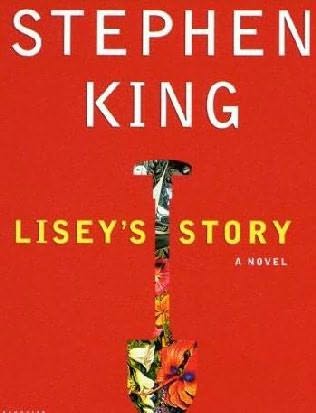
The conspiracy theory camp should have a field day with "Lisey's Story," Stephen King's most recent (and most self-conscious) attempt to write "serious literature."

"Lisey's Story" is a wind-beneath-my-wings story about the over-looked wife of a famous horror writer coming to terms with, well, whatever it is that chicks come to term with in chick lit. Her place in the world? Her ability to roar? Who knows?

A reverse "Bag of Bones", the book exhibits most of late-King's bad tics: descriptions that go on and on and on. And on. Static stream-of-consciouness passages that would leave Joyce begging for a werewolf to jump out. But the deal breaker, the real deal-breaker in "Lisey's Story," are the smuckings. See, Lisey and her husband share this cutesy husband-and-wife language in which smuck replaces fuck. This is toootally smucking cute, the first two smucking times it happens, but then it smucking begins to grate as you realize it is not going to smucking stop until the last smucking page. And there are a smucking LOT of THOSE.

King is seldom less than entertaining, (hey, I'm a fan), and there are a lot of things to recommend the book, but 5,673 smuckings might just be too many. I suspect "serious" reviewers might throw it a bone: "There are no vampires in THIS one! Now we can read without guilt."

But Stevie, I liked you because when everyone else was writing "serious literature" you were writing about wonderfully unserious zombies. What hapenned, man?

See them in a different light

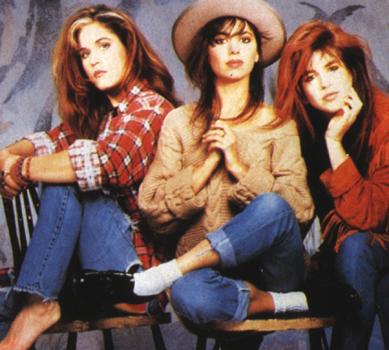
An email exchange with Thomas last week and this ILM thread inspired me to unearth my cassette copy of The Bangles' Different Light. Great they weren't, but that their Billboard ambition kept them from greatness is touching in its way; and despite the number of failed mainstream accomodations there was something admirable about this California girl-band's determination to bring the work of Alex Chilton, Prince/Christopher, Paul Simon, and Jules Shear to shopping malls and Columbia House memberships. Critics slight Different Light because the once-is-enough gimmick "Walk Like An Egyptian" diverted attention from album tracks that failed to match the best of the preceding All Over the Place (1984); but ..."Egyptian" and "Manic Monday" coax the likes of "September Gurls" and "If She She Knew What She Wants" into revealing their considerable charms. Different Light epitomizes the mid-eighties dialectic: how do you wrest art from accomodation this brazen? As solid as All Over The Place is, Different Light's tensions -- how it revolts and beguiles -- never resolve with the satisfying click we experienced with its predecessor; it's constantly asking us to examine our relationship with the term "sell-out" (I tried to find contemporary parallels and came up with Celebrity Skin; too meta maybe?) . The title track is a tetchy manifesto, its harmonies and guitar fury compensating for a flaccid chorus. "Following" remains the album's sleeper: written and sung by bassist Michael Steele, it's "Will You Still Love Me Tomorrow" recast as a threat uttered by a big-haired, dowdy, husky-voiced young woman who is herself negotiating a neutral space between her boyfriend's disinterest and intermittent lust.

But "If She Knew What She Wants" is a jangle-pop marvel, superior to anything on any Rain Parade album or even R.E.M.'s Fables of the Reconstruction, despite a synth part gunking the 12-strings and Debbi Peterson's drums. Hoffs has never recovered from the dismal farrago that was 1989's Number One hit "Eternal Flame," in which she overplayed the charm; she came on like the classic clinging-vine girlfriend who affected coyness just so's she could get your promise ring. But there's no distance between Hoffs' delivery and the lyrics of "If She Knew What She Wants"; she's so arch and knowing you can practically see the thought-bubble. What is on paper a rather smutty joke intended to be sung by a man becomes in The Bangles' hands a coded message whose irony indicts the writer and his locker-room bull. With Debbi and Vicki Peterson providing super harmonies, this is every bit as potent an example of we-got-the-beat female solidarity as The Go-Go's "This Town" or "Our Lips Are Sealed." (That The Bangles had the nerve to subsequently write and record "Eternal Flame" flashes anew, as Philip Larkin wrote, to refresh and horrify.)

PS: Their cover of "Hazy Shade of Winter" smokes. Simon & Garfunkel who?

Saturday, October 28, 2006

A nip here, a tuck there

To seperate Annette Bening's performance from the film in which it plays so central a role is impossible; context is all, alas.

I haven't read Augusten Burroughs' Running With Scissors, which has remained on the best-sellers list in its hardcover and paperback incarnations for the last three years. Let me make a crass deduction: some fraction of its success is due to the American public's hunger for the palliating polysyllabic jargon which has tainted our language as much as it's helped the public understand what ails them. It soothes, it medicates, retained by the body instead of being excreted or pissed out.

The film doesn't take Bening's hysterics seriously; it doesn't take any of its characters seriously. Absent a dose of the kind of wise irony that mediates derision and complacency, Running With Scissors anestheticizes its audience with Hollywoodian humanism, in which characters wear mental illness like actors did those little red AIDS bows in the early nineties: the phony solidarity signifies defiance against the straight world; sexuality is merely a universal condition, like halitosis and untrimmed toenails. The film's purportedly gay protagonist is allowed more chemistry with adopted sister Evan Rachel Wood than with the thirtysomething man (Joseph Fiennes) who deflowers him (in the book Burroughs describes a virtual rape). I felt more sympathy for the monstrous absent father, played with subtly gradated despair by Alec Baldwin (Stephanie Zancharek: "Watching him, I kept thinking of the Delmore Schwartz poem `The Heavy Bear Who Goes With Me,' a lament about the limits, and the clumsiness, of the bodies our spirits are locked up in."). How does Burroughs escape? By moving to New York City, of course. That director Ryan Murphy doesn't trouble young Burroughs' imagination with fantasies of what NYC must be like during the most hedonistic period of the century (the late seventies) is indicative.

The creator of "Nip/Tuck" craves acceptance too, demonstrating his fealty to Hollywood tradition by effacing its own history; like mental illness, it's enough to simply allude to history for brownie points. It never occurred to Murphy that in casting Jill Clayburgh, the has-been star of the unbelievable but honest An Unmarried Woman, he tipped his hat to an era in which neuroses was at least probed and tested. Running With Scissors casts her as a morose hausfrau who munches on cat food while watching "Dark Shadows." Refusing makeup in an attempt to look "ugly" in the classic Hollywood way of signaling a comeback (a la Gloria Swanson and Ellen Burstyn), she shows up Bening's self-congralutatory bravura; and since Clayburgh is such a good sport, she's given a last scene between her and Joseph Cross that's Academy Award baiting of the most heinous kind.

A genius easy-listening album

Jane Dark's written the most beautiful description of how Scritti Politti's White Bread, Black Beer sounds:

It was like the dream of Brian Wilson that Brian himself could never really approach, of an easy listening album that was at the same time a work of genius. And if Scritti was occasionally compelled to murmur the the titles from an entire Run-DMC album in a distantly pretty bridge, or coo angelically to the effect that punks jump up to get beat down, sounding exactly as if he was blessing the beasts or inventing a lullaby for a child who had been dead for two decades, well, this was the sense of the album, though sense was not very much at stake. Something else was, though it was hard to be sure what, exactly, and this mystery was the album's greatness, or perhaps it was the invention of a previously unknown category of pop music, or the way a voice can trace its own history, and the relation of the individual to history, or how it felt to live in a beautiful and perfectly numb present, at the edge of a hole into which years and things one loved kept falling.

Friday, October 27, 2006

"The feckless behavior of the Bush administration has been a lurid illustration of Noam Chomsky's books – which I've always considered half lunatic."

Camille Paglia sits down with Salon for this fearless, contrarian interview. Subjects: "Robo-Hillary," the Bush administration's provincialism, Democratic hypocrisy over the Mark Foley page scandal, and Fox News ("what is this shibboleth about Fox as some sort of satanic force in American politics? Get over it!"). A sample:

After three or four days of it, as soon as I heard Foley's name, I turned the sound off or switched channels. It was gargantuan overkill, and I felt the Democrats were shooting themselves in the foot. I was especially repulsed by the manipulative use of a gay issue for political purposes by my own party. I think it was not only poor judgment but positively evil. Whatever short-term political gain there is, it can only have a negative impact on gay men. When a moralistic, buttoned-up Republican like Foley is revealed to have a secret, seamy gay life, it simply casts all gay men under a shadow and makes people distrust them. Why don't the Democratic strategists see this? These tactics are extremely foolish. Gay men through history have always been more vulnerable to public hysteria than are lesbians, who -- unless they're out there parading around in all-leather bull-dyke drag -- simply fit more easily into the cultural landscape than do gay men, who generally lead a more adventurous, pickup-oriented sex life.

Thursday, October 26, 2006

Black holes

Every critic has his blind spots. Mine was the best-selling male artist since Elvis. Garth Brooks' "Cold Shoulder" is playing while I type this. Other than "Friends in Low Places" and the Billy Joel cover his catalogue is a mystery to me. Your insights are welcome.

Tuesday, October 24, 2006

Pre-natal soul discharges

The Boredoms' music floats in too much amniotic fluid for my taste, but I give them another chance. Josh is conciliatory. Mike Powell is downright generous – and almost converted me.

Monday, October 23, 2006

This is how she feels

In "Self-Reliance," Emerson writes, "A man is to carry himself in the presence of all opposition as if every thing were titular and ephemeral but he." I wish I'd written about Jenny Lewis' "Rise Up With Fists!" in February; let's say that it's taken seven months for me to assess its truths. Most of the songs on Rabbit-Fur Coat range from good to excellent, but the third track is sung in a voice so unwavering and graceful that I can understand why the surrounding tracks carpeted its path with palm fronds*. "What am I fighting for? The cops are at the front door," Lewis sings. "I can't escape that way, the windows are in flames." Imminence as plashless as Lewis' seeks neither comfort nor escape. She's as beyond death-or-glory shtick as Joe Strummer was on "This is England." History isn't the nightmare from which she can't awake -- the present is. What good are maxims? This is how she feels.

Emerson again: "I ought to go upright and vital, and speak the rude truth in all ways."

*Chrissie Hynde on "Hymn to Her" comes to mind -- the dusky tonal control -- although Hynde, uncharacteristically, exposes herself to such a degree that her voice dredges painful ambivalences in a line like "Something is lost, something is found" that Lewis has long since abandoned.

The Wire Almost Killed Me

I came way late to the party for The Wire, but over the past couple of months my better half and I have knocked out almost the entire first three seasons on DVD, only lacking about three more episodes in season 3 to be fully caught up to the fourth installment. Of course, here is not the place for up-to-the-minute breakdowns of the ongoing campaign, 'cause I'm a cheap bastard and therefore ain't gonna pay $12 a month to watch season 4 as it happens, especially when I'm only now just catching up.

The only point I'm trying to make here is that watching The Wire has apparently ruined almost every other form of dramatic entertainment for me. I'd swallowed almost every episode of Law and Order: Special Victims Unit with satisfaction, mollified by its one-and-done approach of putting a neat little bow on the end of every show. Suddenly, however, it seems almost ridiculously tame and rigid (I'm aware it was never exactly the grittiest of shows), the characters never even alluding to the bigger picture of their war on crime except to engage in the occasional awkward swapping of Dem Party talking points. The bad guys are sometimes humanized, sure, but the simple fact that they pretty much never recur ensures we'll always side with the heroes.

And I know it's totally unfair to hold a 2 1/2 hour movie against a 40-odd hour show, and I know the film wasn’t necessarily aiming for street-level realism, but even The Departed left me sour to a degree. Perhaps 40 hours of Jack Nicholson's character would have plumbed fascinating depths, but as it was he verged on coke-and-whore caricature, quoting Joyce and Lennon as twin pillars of an Irish Catholic survivor of the 60s. As complex crime lords go he’s got nothing on Stringer Bell’s frustrated social striving, using Robert’s Rules of Order to govern meetings with street dealers and ultimately realizing his illegal empire can’t buy institutional legitimacy. Likewise, the ways in which Damon and DiCaprio’s occupational pressures hampered their respective trysts with the shrink were nowhere near as gut-wrenching as watching Kima distance herself from her partner and new baby. I thought Baldwin and Wahlberg were the standouts of the entire cast with their verbal pungency and hair-trigger tempers, but that only puts them about dead-level in my book with Rawls and Burrell.

And don’t even get me started on the nuts-and-bolts aspects of the crimes themselves. The use of text messages and calls to “Mom” in order to warn against encroaching police were canny, but had absolutely nothing on The Wire's ever-evolving games of one-upsmaship between detectives and dealers (cell phones beget pay phones beget burners).

The thing is, I actually quite liked The Departed too. It had plenty of clever moments and I thought Leo was far more distinctive than Alfred apparently does. He's just no Jimmy McNulty.

Sunday, October 22, 2006

She lets them eat cake

Ahistoric, as nutritious as a pink cookie, Marie Antoinette is the biopic that America deserves. Certainly no one could have directed but Sofia Coppola. "I always liked that period of France, the 18th century, the white wigs,"she admitted recently. "I always thought that visually it was an interesting, fun period."

I take her word for it. Not for Coppola the earnest analogies between epochs that her contemporaries make as rehearsals for Academy Award ceremonies; Kirsten Dunst's Marie Antoinette makes Norma Shearer's look like Madame Defarge. This is a film of which the Bret Easton Ellis of Less Than Zero would have proud. Dunst is the blank, busty girl dancing to Bow Wow Wow and "Ceremony" in your hometown '80s club* (snuff makes a dandy substitute for cocaine). How telling that Coppola regards her most famous utterance -- "Let them eat cake!" in response to the starving millions clamoring for change -- as a distortion attributed to rabble-rousing newspapers. Rousseau is Dunst's Deepak Chopra, inspiring "soul-searching" of the pastoral kind: the young queen retreats to Triannon to tend lambs with her curly-haired moppet of a daughter; and compared to the bewigged intrigue of which the royal court at Versailles is composed, who could argue? The conclusion is moving in a manner not acknowledged by any of the reviews I've read: the emo King Louix XVI (a jowly Jason Schwartzman) and his queen impassively sit at their dinner table while outside the mob calls for their heads. It's like every eighties movie in which the parents confronted their errant children about throwing a block party while they were on vacation.

This is the kind of film which delivers on the frivolity of its trailer but whose frankly risible aims turn the stomach. It's not often I declare that I had a great time and hated myself afterwards. It's Coppola's most striking film to date, and -- for those who go for that kind of thing -- the demonstrably auteurist statement her father has (to date) never made.

*Coppola scores the coronation of Louis XVI to The Cure's "Plainsong": she reveals the pubescent will-to-power obscured by its huge synth-swell intro. "Mope-rock" feh.

Wednesday, October 18, 2006

Not enough ooh-ooh-ooh in the world

If anyone can confirm whether Ne-Yo composes music as well as lyrics, I'd appreciate it. His thin, high tenor is serviceable; the lyrics find clever Smokey Robinson-esque variations on wolfish vulnerability (he wonders whether "the little wrinkle on your nose when you make your angry face" in "When You're Mad" excites him in a way that his girlfriend's laugh doesn't) and love-man narcissism (pleading his lover to fuck in front of the mirror "so that I can watch you enjoying me" is worthy of Bryan Ferry). The melodies, however, are indelible, which is higher praise than Ne-Yo himself (judging from the album sleeve photos of lyrics jotted on yellow pads) has accepted.

If there's a better hook I've heard all year than the one sweetening "Sexy Love" then I don't have ears. Never let it be said that Ne-Yo hasn't studied his Motown collection: the plucked harp hook comes quick and unembellished, there's call-and-response vocals, a bridge, a chorus, and then the bridge and chorus trade places. Its ooh-ooh-ooh's recall Jeffrey Osborne's last pop Top 40 hit, "You Should Be Mine (The Woo Woo Song)" but sung by a serviceable tenor whose anonymity mitigates the rather gross post-coital admission (Ne-Yo covered her in jizz and she liked it); a better singer might have massaged his ego all over this*. He's like a teenager who's become infatuated with his girlfriend after they make love for the first time -- a rare breed as we all know, since our first instinct is to head for the hills. If nothing else on In My Own Words is at "Sexy Love"'s level, give Ne-Yo credit for fulfilling the promise he made to his audience on "So Sick" -- he wrote his own classic and (almost) made his own album as irrelevant as the insincere chart fodder he's quick to dismiss ("So Sick" is Ne-Yo's "Panic," except he's peeved while Morrisey's pissy).

* El Debarge an exception, maybe?

Still not taking themselves seriously

The Pet Shop Boys have become such a savvy live act that these days their strengths and weaknesses on record dovetail with their performances. Their kind of dance music is too elegant ("tweed-thump," let's call it) for the staid venues they often book; Neil Tennant's voice has grown increasingly wan; their non-existent American profile suppresses audience enthusiasm for their post-1988 material. (I was helpless with embarassment when the crowd returned to their seats as "Left To My Own Devices" segued into "I'm With Stupid.")

At the Jackie Gleason Center for the Performing Arts (really), the Boys mixed rarely played singles and album tracks ("Heart," "Shopping," and "Dreaming of the Queen" made welcome appearances) with tracks from current album Fundamental; "Minimal" and "Integral" thumped like new classics. I blame budget cuts for the second-rate dancers and Tennant's mere half-dozen costume changes (big points for the Russian kommissar getup he sported for "The Sodom & Gomorrah Show," which, incidentally, got the Andrew Lloyd Webber treatment it deserved). Tennant, wearing a top hat and jacket like David Copperfield's Mr. Murdstone for most of the evening, radiated bonhomie and slyness, the best kind of funny uncle. Age hasn't withered Chris Lowe's blankly sexy miming at the keyboard or his way with a yellow raincoat.

Bah humbug to the caviling. The audience represented Miami at its best: Euro muscle-queens, fag hags, and the occasional hetero couple gingerly mouthing lyrics. It drowned out Tennant during the impressive muscle-flexing which comprised the concert's final third: "Where The Streets Have No Name," "It's A Sin," and "Go West." Hell, my group (my straight best friend, his coworker, and her 17-year-old nephew) drowned me out. At their best the Boys prove that middle-age doesnt signal encroaching twilight so much as a stranger kind of dusk.

Tuesday, October 17, 2006

Dino-Rock and Middlebrow Blues: A Night of Sit-Down Fun with Eric Clapton

So I caught Clapton in concert Sunday night at the RBC Center in Raleigh. You can read the review here (written in about an hour and a half, immediately following the show to meet deadlines, so be kind). Ridiculous traffic going into the arena due to the presence of the State Fair across the street. Long story short, I spent 45 minutes on a single exit ramp, my car overheated, and I had to abandon it and walk the rest of the way to the show. Rockandfuckingroll, right?

Anyway, it was mostly your typical retrospective play-the-hits kind of show, perhaps a bit surprising for how liberally it drew from the '89 Adult-Contempo classic Journeyman (I'm betting that'll please Alfred). On one hand, Clapton's never been even good as a blues singer, and whether it was his advancing age or just the rigors of live performance he sounded even more pinched and hoarsely growly than usual (not to be confused with the equally-unpleasant but far more effective sinister snarl Jagger perfected in the 80s).

Luckily, there's still great passion and pyrotechnics in his axe. Clapton's even been ballsy enough on this tour to bring along hotshit guitarists Derek Trucks and Doyle Bramhall II and let them take frequent center stage for solos (with Trucks also performing Duane Allman's slide parts on the Derek and the Dominos selections). This is roughly equivalent to Magic Johnson challenging Dwyane Wade and LeBron James to a game of HORSE (if EC was pushing three bills of course), but clearly Slowhand's technique hasn't deteriorated nearly as badly as Magic's jumpshot and the sexagenarian more than held his own.

For a show full of 10+ minute blues-rock jams, it was a satisfyingly no-frills affair. Effects, banter, and set transitions were handled with a minimum of fuss, and only rarely did the solos tread towards tedium, mostly aiming for volume and thrills instead.

Sunday, October 15, 2006

See what I mean?

I've been informed the Coen brothers are indeed on tap to direct the film adaptation of No Country for Old Men, which makes my Fargo comparison a little too prescient.

Dear Bros.:

You ALREADY did Fargo. You already did the folksy sheriff and the absurdist escalating violence.

Now it's set in New Mexico, so it's different?

I'm sure it will be a good movie. Birds of a feather do flock together.

Saturday, October 14, 2006

We've been Down that Road

This is a two-part post. I'm preparing to read Cormac McCarthy's The Road, and before I venture into the "searing postapocalyptic novel" (notice the missing dash)"destined to become Cormac McCarthy's masterpiece," I'm going to reminisce on my reaction to the incredibly overrated No Country for Old Men.

I extracted a few things from No Country for Old Men:

One: Life's bad now, it's not like in the good old days, when everybody knew their place, and gumdannit, no one needed no drugs.

Two: The moment people stopped calling each other "sir" and "ma'am", THAT'S when it all went to hell, see?

Three: If your name is Cormac McCarthy, you're not just writing a thriller. Oh, NO. It's LITERATURE. Never mind that you took the sheriff from Stephen King's Misery. If Richard Farnsworth wasn't going through your head's casting office, you don't know your good hearted, salt-of-the-earth old sheriff types. Never mind that Fargo did it all so much better. Never mind A Simple Plan, never mind all those Tarantino-esque movies. You're above all that. You're Cormac McCarthy! When YOU do that same old thing, you are expanding the territory of American fiction- as the Newsweek blurb would have it.

Hmmm.

And now he's done it again, with The Road.

Imagine- just bear with me- this is going to blow your mind- what if- what IF technology failed us tomorrow, and there were no, like, CELL PHONES, what would happen! Oh, God! That Cormac McCarthy, he's created a new genre, the post-apocalyptic novel!

Sorry, the "postapocalyptic" novel, no dash.

Not to be vitriolic or anything.

No Country for Old Men was a good, familiar thriller from an old coot. The rest was hype.

I shall report from the end of The Road and I have no problem with crow if you add a little ketchup on the side.